Using Expert Quotes in a Report: Confirm Wording, Attribution, and Context
Get expert quotes approved with attribution and surrounding context. Keep original replies, proposed edits, and approved versions linked in OneCrew.

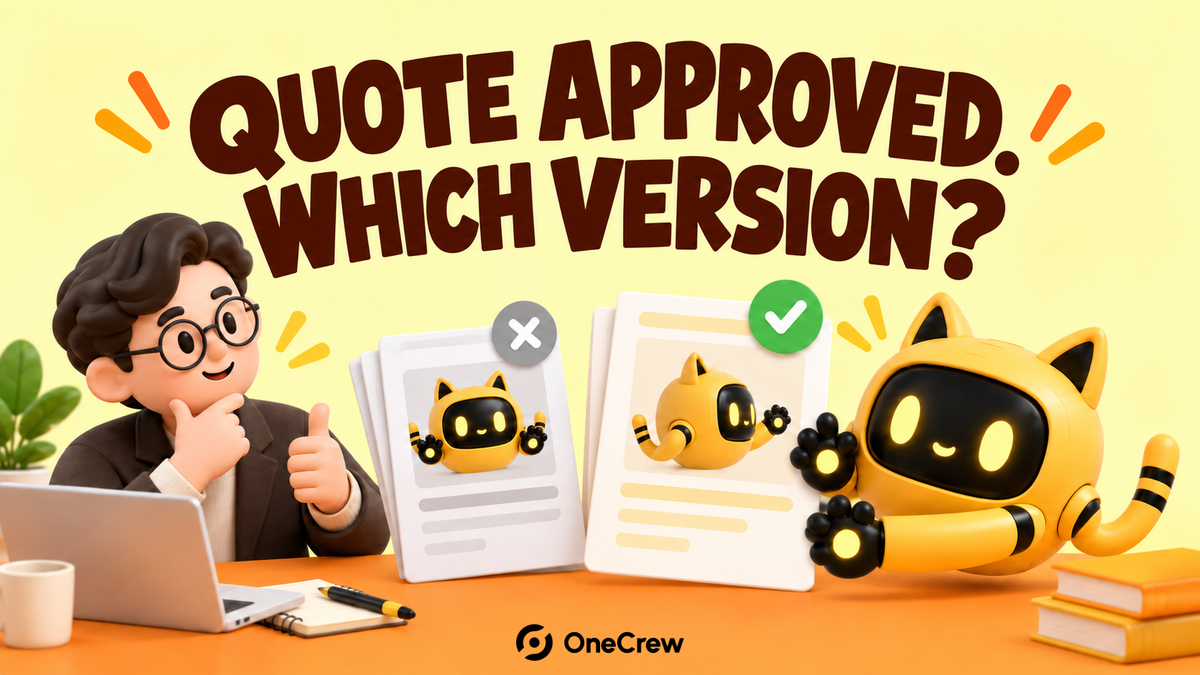
An industry expert sends a thoughtful answer for your report. The editor extracts two sentences, changes the heading, and places them beside a new conclusion. The words are mostly intact, but readers may now see an endorsement the expert never intended.
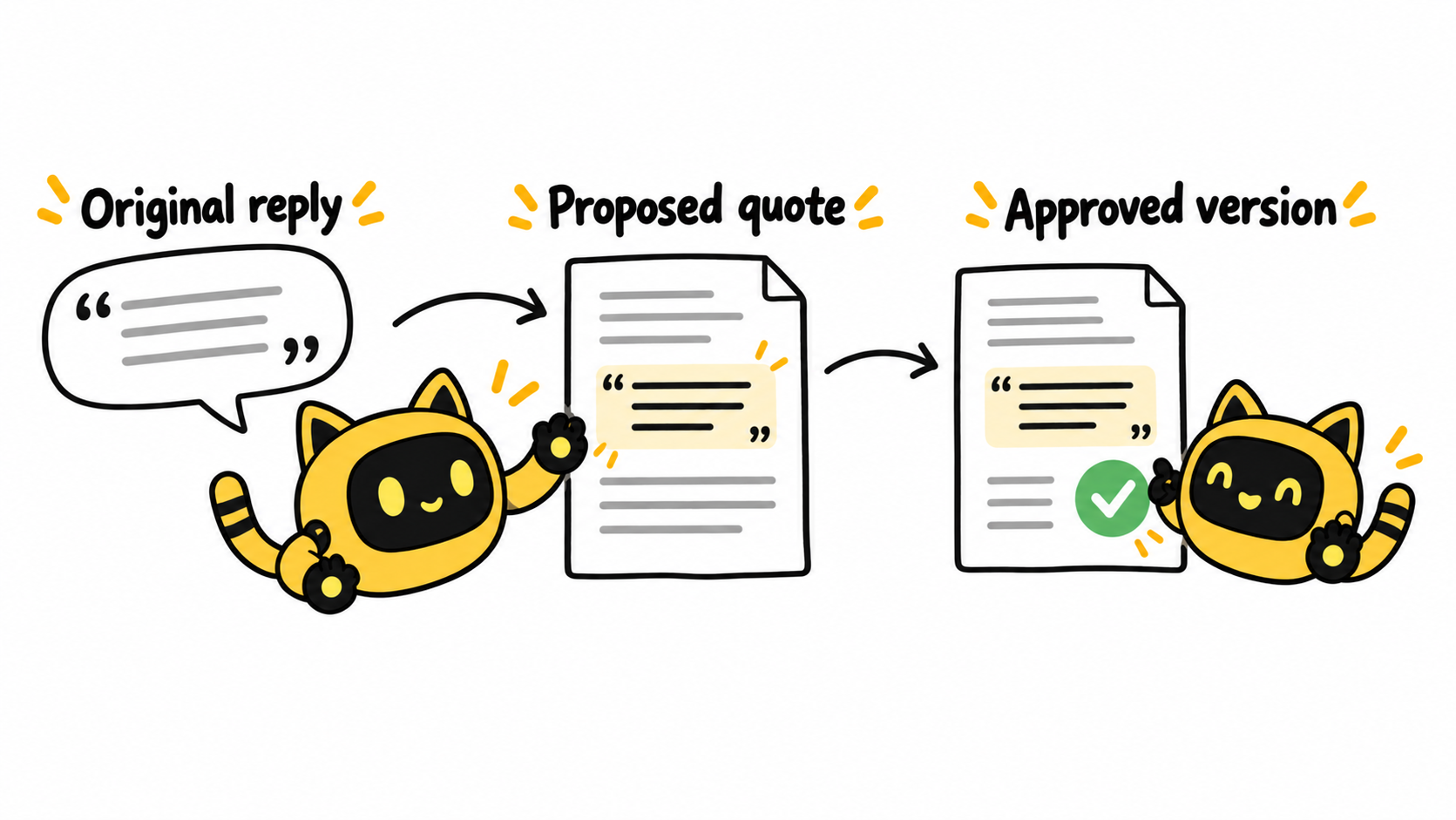
Ask contributors to review the proposed quote, attribution, and surrounding context together. Preserve the original response, edited proposal, and approved version separately. Agree on report authorship separately from permission to quote.
Define the contribution before asking for it
Explain the report’s audience, the question you want answered, and how you plan to use the response. Are you seeking a short quote, a Q&A, or a jointly written section? Agree on the contribution, deadline, and compensation so the expert understands the commitment. If you also want promotion on their channels, ask for that separately.
OneCrew is a workspace for organizing partnership records and email conversations. Keep the original answer, contribution scope, contact, and agreed dates in a worksheet. An editor can then find both the source and the boundaries of the request.
Return a quote proof with context
Include the proposed wording, neighboring paragraphs or a page proof, and the person’s name, title, organization, and relevant link. Job titles change. Use the contributor’s current confirmation instead of copying an old interview biography.
| Review item | Question to resolve |
|---|---|
| Proposed wording | Does the edit preserve the original meaning? |
| Context | Do headings, charts, or surrounding claims change its interpretation? |
| Attribution | How should the name, role, and organization appear? |
| Usage | Will this also become a social card or another asset? |
If you are paraphrasing, make that clear rather than putting quotation marks around a rewritten statement. For another language, check qualifiers, tone, and technical terminology, and return the translation alongside the original when needed.
Approval belongs to a version
Date or version the proof and explain what the contributor should review. If a later edit changes the meaning, heading, or associated conclusion, send the affected section back for confirmation. Even a layout change deserves a check that no important qualifier was cut off.
Thank you for contributing. We propose using the attached wording in [report and section], attributed to [name, role, organization]. Please review it with the surrounding text and let us know by [date] whether it accurately reflects your point. The proposed use is [this report only/additional specified uses].
In OneCrew, retain separate links to the original answer, returned proof, and confirmation email. Update the version status and owner. Prepare any follow-up from the same partnership record so an approval of an old edit is not mistaken for approval of a new one.
Check the attribution in the complete report
Before release, verify the ownership of the idea, the title and organization, and whether the contributor has been incorrectly presented as an author of the full report. Check any social excerpt against the approved context as well. Keep only the contributor information needed for this work.
When another editor takes over, include approved versions and owners in the partnership handoff checklist.
For the next expert contribution, create the original-response, proposed-quote, and approved-version links in OneCrew. Every published quotation should have a clear path back to the conversation that produced it.