A Creator Replied After the Campaign Ended. What Should You Say?
A late first reply can reopen the conversation. Check the original offer, explain what is available now, and give the creator one next step you can deliver.

A creator finally replies, “I’d love to hear more.” The invitation is months old. That campaign has wrapped, the budget is closed, and the product you planned to send may have changed. You want to welcome the reply without making the original offer sound available.
Thank them, explain where the project stands, and offer one next step you can actually deliver. A late first reply reopens a conversation. It does not, by itself, confirm a partnership on the old terms.
Start with the invitation they answered
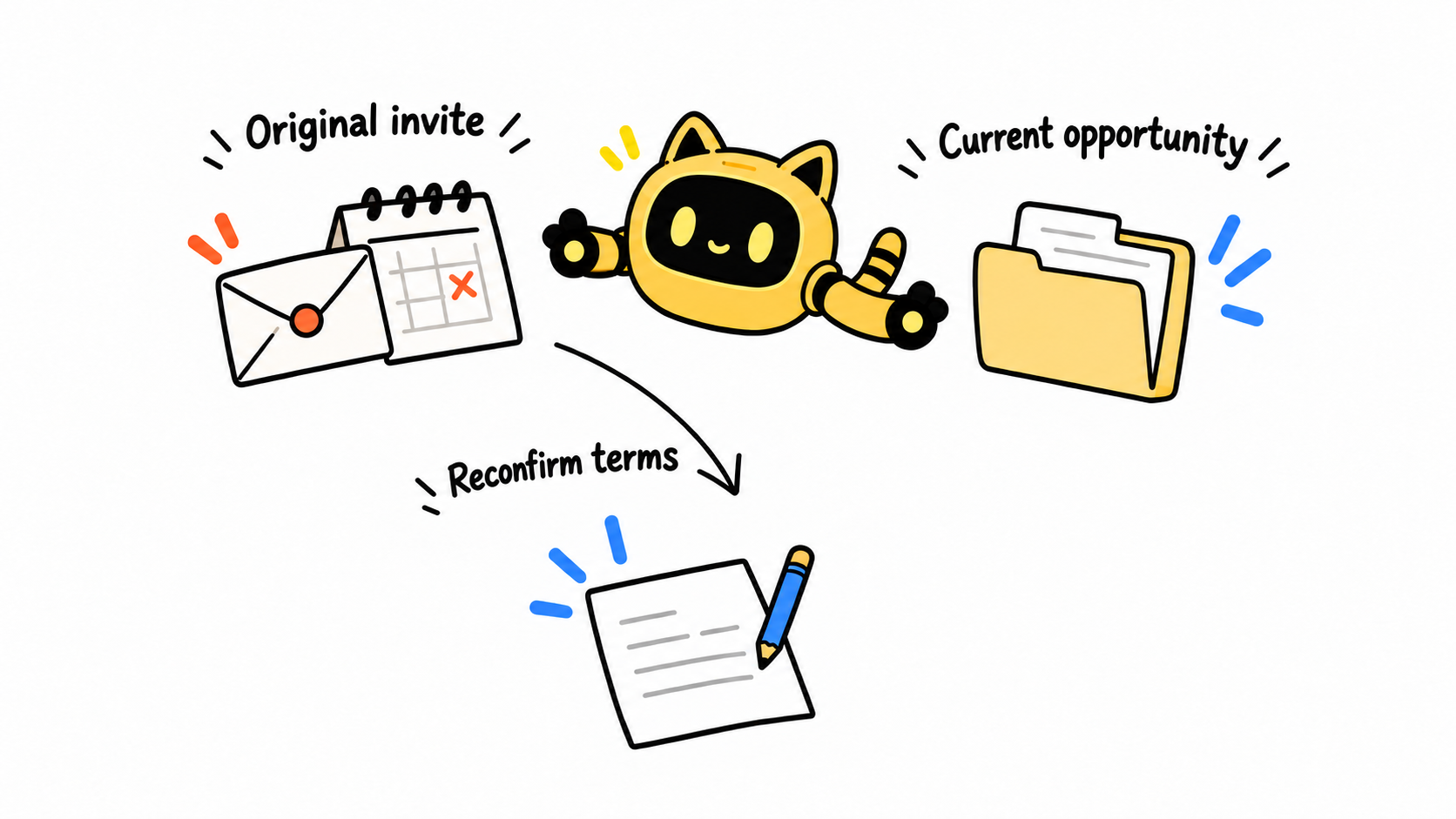
Read the original message and any follow-ups before sending a new brief. Identify the project, the terms you offered, and anything either side had already confirmed. Pay particular attention if the creator mentions a previous fee, delivery date, or promise to send a product.
This guide covers an initial invitation that went unanswered until after the campaign closed. If a partnership was already agreed, a sample was shipped, or production started, check the outstanding commitments before discussing a new project. For a former partner you want to approach proactively, see our guide to restarting a dormant creator partnership.
OneCrew helps teams organize creator information and partnership conversations. Start with the creator’s record, notes, and recorded messages to establish which invitation they received and how the conversation ended. That gives your reply a specific opening without asking the creator to reconstruct the history for you.
Record the current state plainly: “Original campaign closed; first reply received; no new partnership confirmed.” Keep interest in a conversation separate from acceptance of a current offer.
Compare the old offer with what is available now
Before reusing any details from the old email, make a short comparison. If something is unknown, mark it as pending instead of filling the gap with last quarter’s terms.
| Check | Original invitation | Confirm for the current opportunity |
|---|---|---|
| Project and product | Campaign and product version | Whether a new project exists and which product it covers |
| Deliverables | Content format and channels | The content actually needed now |
| Budget and arrangement | Fee range, gifting, or another offer | Approved budget and current partnership model |
| Timing | Old delivery and publication dates | New window and the creator’s availability |
| Content use | Any reposting or advertising use discussed | The usage requested for this project |
You do not need to negotiate every item in the first reply. The comparison prevents you from presenting a new campaign while silently carrying over the old offer.
In OneCrew, preserve the original facts in the creator’s notes and add the current comparison, date, and owner. Before drafting a reply, review what is confirmed and what needs an internal answer. This also gives a colleague a clear starting point if they take over the conversation.
Scenario 1: The old campaign is closed, and you need to check what is next
Be clear that the original opportunity has ended. Then name what you will check and give a realistic date for an update. If there is still no opportunity on that date, send the update anyway.
Use this email template when you can make a specific internal check. Replace the brackets before sending.
Hi [Name],
Thanks for getting back to us. Our original invitation was for [campaign], which has now wrapped up, so we would need to revisit the timing and terms.
I’ll check whether there is a fit with [current product direction or upcoming project] and get back to you by [specific date]. There’s no need to hold production time for us at this stage.
Thanks,
[Brand contact]
“I’ll check” should lead to an actual decision. If there is no project owner, no plausible opportunity, and no date when you can give an answer, use the third scenario instead of creating an open-ended wait.
Scenario 2: You have a real new opportunity
Describe the new project briefly and highlight the changes. If the original email included a fee, be explicit that the updated scope and budget will be set out again.
This email template treats the current opportunity as a fresh invitation.
Hi [Name],
Great to hear from you. [Original campaign] has ended, but we’re now planning [new project]. We’re looking for [content and channel], with a proposed window of [dates and time zone].
The main change from our earlier invitation is [product, deliverables, or partnership arrangement]. [State the confirmed budget information, or say that the budget is still being confirmed.]
Would this direction be of interest? If so, I can send the updated brief so we can discuss availability and terms.
Thanks,
[Brand contact]
“Send it over” means the creator is willing to review the opportunity. Confirm the new deliverables, fee, timing, and relevant usage before marking the partnership as agreed. A number in an old email is not a substitute for a current agreement.
If the old subject line contains an expired date, start a clearly named thread for the new project and include one sentence of context. Keep the connection to the old invitation in your records so the history remains easy to follow.
Scenario 3: There is no suitable project right now
You do not need to invent a collaboration to keep the conversation friendly. Thank the creator, close the original opportunity clearly, and ask whether future contact would be welcome.
Use this email template when there is nothing concrete to move forward.
Hi [Name],
Thanks for replying and for your interest in working together. [Original campaign] has now finished, and we don’t currently have another project that fits this invitation.
Would you be comfortable with us contacting you at this address if a suitable opportunity comes up? There’s no need to prepare anything or reserve time for this one.
Best,
[Brand contact]
If the creator asks not to receive further invitations, record that preference clearly. A lack of response to your question should not be logged as consent to ongoing invitations.
Leave a useful next step in the record
After replying, record four things: the old campaign is closed, which scenario applies now, what you promised next, and who will handle it by what date. If you are checking internally, record the update date. If the creator is reviewing a new brief, record the version sent. If there is no opportunity, close this round clearly.
Use OneCrew to review the recorded exchange and add the new facts to the creator’s existing notes. When preparing the next reply, bring together what has already been said and what still needs an answer. A colleague can then continue without asking the same questions again.
A late reply does not require a judgment about the creator’s priorities. It requires an accurate account of the old invitation and a useful answer about today. Start in OneCrew with the original outreach and the latest reply, compare the terms, and prepare one next step you can follow through on.