A US-Based Creator May Have a Global Audience. How Do You Check Market Fit?
Separate creator location, audience geography and sales markets. Check report scope and dates, request only necessary data, and record the evidence in OneCrew.
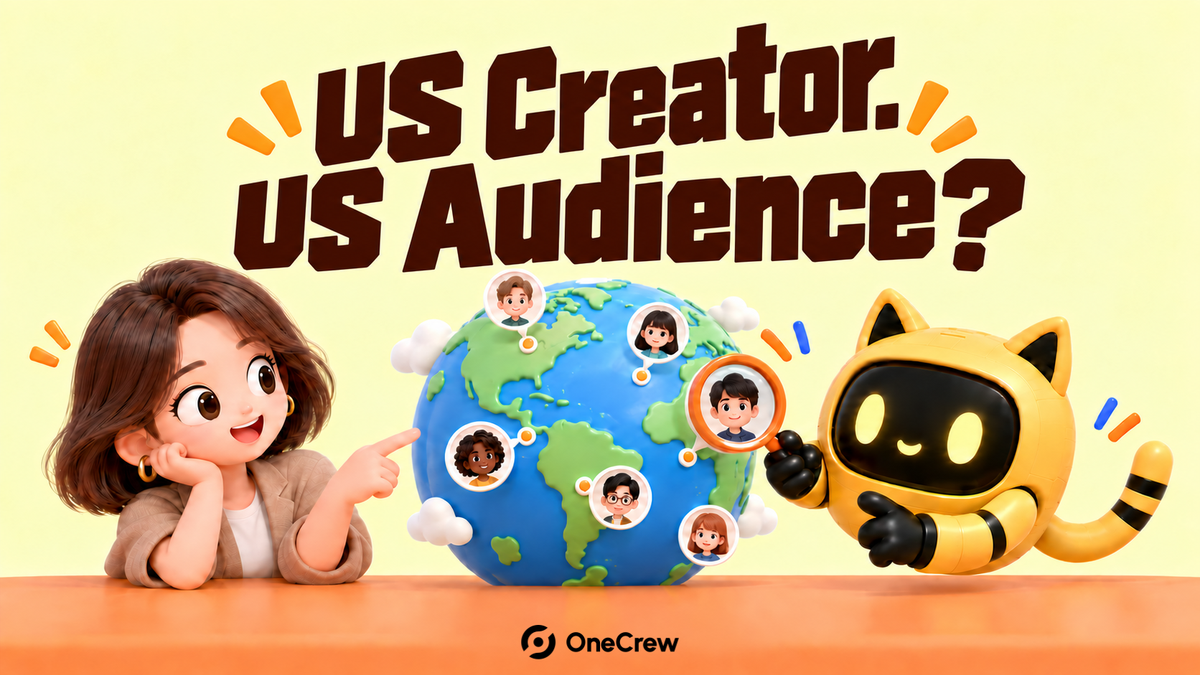
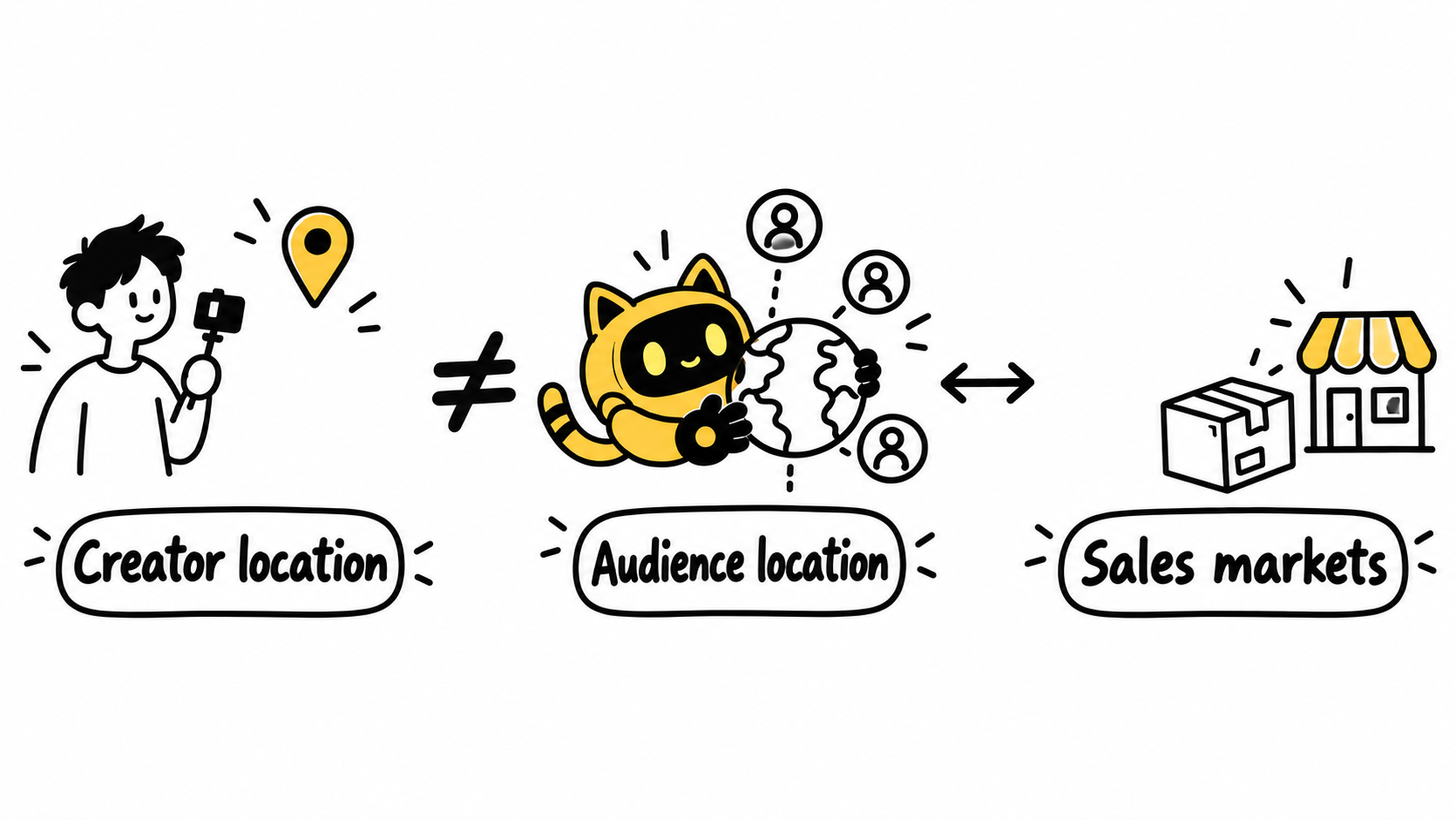
A creator lists a US address and makes videos in English. Does that make them a good fit for a US campaign? Not on those facts alone. Check where the creator is based, where their audience is and where your brand can sell as separate questions. A shipping address helps you send a sample; audience evidence helps you assess whom the content may reach.
A discussion about influencer location asks whether a creator's country affects a brand's willingness to work with them. Location can matter for shipping, production and coordination. It should not silently become a substitute for audience geography.
Define the sales market before interpreting creator locations
Specify the countries or regions this campaign needs to serve. Check the purchase destination, stock, delivery availability and language for those markets. Interested viewers may still be unable to buy if the product is not available where they live.
Separate three facts in the shortlist. The creator's location supports logistics and coordination. Audience geography supports the market-fit decision. The actual audience of the commissioned content supports the later review. Mark missing information as unconfirmed rather than inferring it from an accent, posting time or a handful of comments.
OneCrew connects creator discovery, email workflows and persistent working tables. Save the profile, relevant content and confirmed location information, with separate fields for the target market and audience evidence still needed. Ask AI to organize the gaps from those materials so the follow-up requests only information that affects this decision.
Ask what the report measures, not just for a percentage
“What percentage of your audience is in the US?” leaves room for several different answers. Specify the platform and proposed content format, then ask for the report name, period and geography breakdown. Followers, people reached, views and watch time are different measures. They do not belong in one ranking without explanation.
For example, YouTube describes its Top geographies report in terms of channel watch time. It also notes that some geography data may be limited. Do not relabel that report as a follower percentage, or treat an undisplayed region as proof that it has no viewers.
- Which account and platform does the report cover?
- Does it measure followers, viewers or watch time?
- Is the scope the whole channel, a particular item or a content format?
- What period does it cover, and did an unusual viral post change the recent audience mix?
Agree on a recent comparison window and adjust it to the creator's publishing frequency. That window is a team choice, not a universal qualification rule. Request only the aggregate information needed; unrelated income or project details can be obscured. Account login access is unnecessary.
Make the request easy to answer
Hi [name], our [product] campaign is aimed at [market], using [platform and content format]. We would like to confirm how well your recent audience matches that scope.
Could you share the main geography breakdown for [channel or content scope] over [agreed period]? Please keep the report name and date range visible; unrelated revenue or project details can be hidden. If a particular measure is unavailable, let us know. We will consider this alongside content and product fit, and do not need access to your account.
Check the locally synced email conversation in OneCrew before drafting the request. If the creator already supplied a report, refer to it and ask only for a missing date or definition. Save and review the draft, then send it. Once the reply arrives, update the same candidate record with the source, scope and confirmed conclusion.
Do not rank percentages that describe different things
Suppose one creator shares a channel watch-time breakdown, another shares follower locations and a third says their audience is “mostly American.” Those are not directly comparable. Fill the decision-relevant gaps first. If the evidence remains incomplete, retain that uncertainty or consider a small, controlled collaboration.
There is no single target-country percentage that suits every brand. Your niche, objective and costs affect what is useful. Geography is also only one condition: a creator can reach the right country while discussing subjects unrelated to the product.
Keep the original measure, source location, team assessment and next action separate in OneCrew. “Report received; metric definition awaiting confirmation” gives a colleague more useful information than an unsupported “audience approved.”
After selection, check the purchase destinations available to viewers in different countries. Start now with one shortlisted creator whose location is known but whose audience evidence is missing. Record that gap in OneCrew and prepare a request with a clear reporting scope.