How to Brief Creators With Reference Videos Without Asking for a Copy
Specify which structure or filming technique a reference illustrates, then agree an original concept. Includes a reference-note template and review steps.

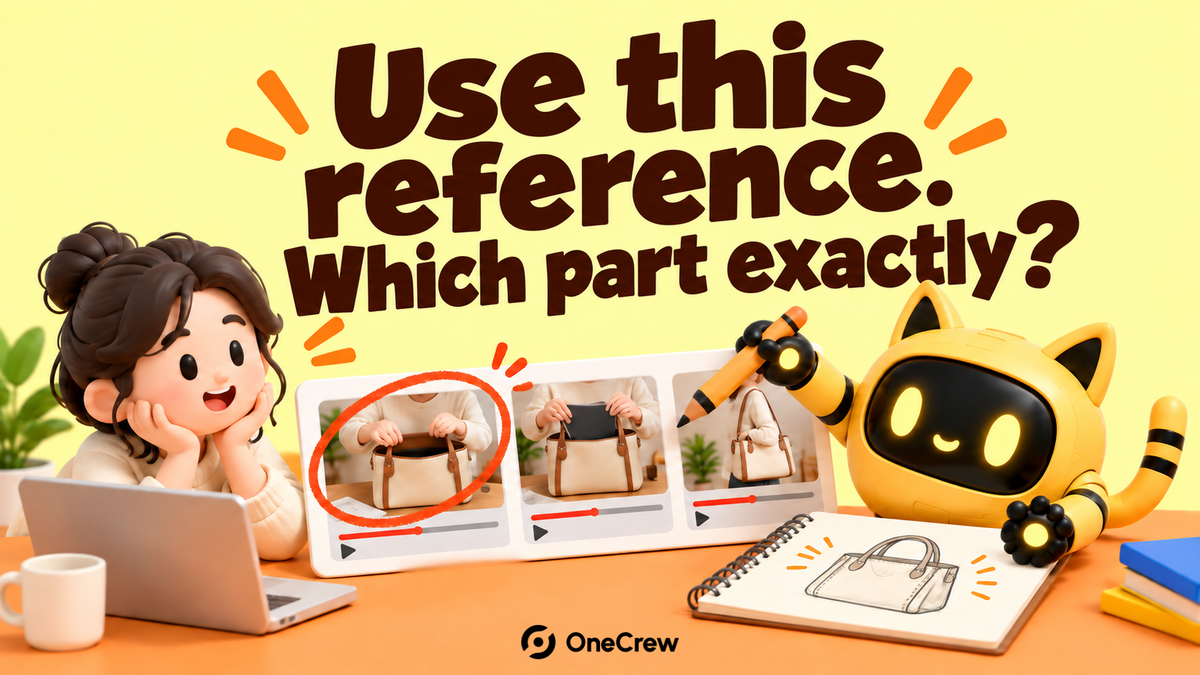
“Make something like this” can mean an opening structure, a camera angle, a pace—or a near-copy of another creator’s work. When sharing a reference video, specify the element you want to study and how the new piece should use your own product facts and the creator’s own expression.
In a public video-creator discussion, the author reported discovering that an outsourced script matched text on a website. For a brand commissioning content, separating what to learn from a reference from what to deliver can prevent an avoidable misunderstanding.
Add an actionable note to the reference link
Start with one reference that addresses the current creative problem rather than dropping ten links into a message. Name the time range and the specific technique. For example: “Use the first five seconds as a structural reference for showing a difficulty before the product; design a new opening around retrieving an item from our bag.” That gives the creator a task, not a request for similarity.
OneCrew is a workspace for creator information, project records and collaboration email. Save the reference, the element to study and the confirmed product facts in the project table, then use that material to prepare the brief. The team shares an interpretation rather than just a URL.
Separate structure, expression and actual assets
- Structure: the order of information, such as a problem followed by a demonstration and result.
- Expression: camera distance, pace or tone that may need adapting to this creator.
- Specific assets: dialogue, footage, music, images or someone else’s experience, each requiring its own use check if proposed for reuse.
A publicly viewable reference is not automatically a supplied asset library. If the project needs a specific piece of material, verify the relevant permission through the appropriate process. When borrowing a narrative approach, ask for a new concept grounded in the actual product and filming conditions. Do not turn another person’s experience into first-person testimony.
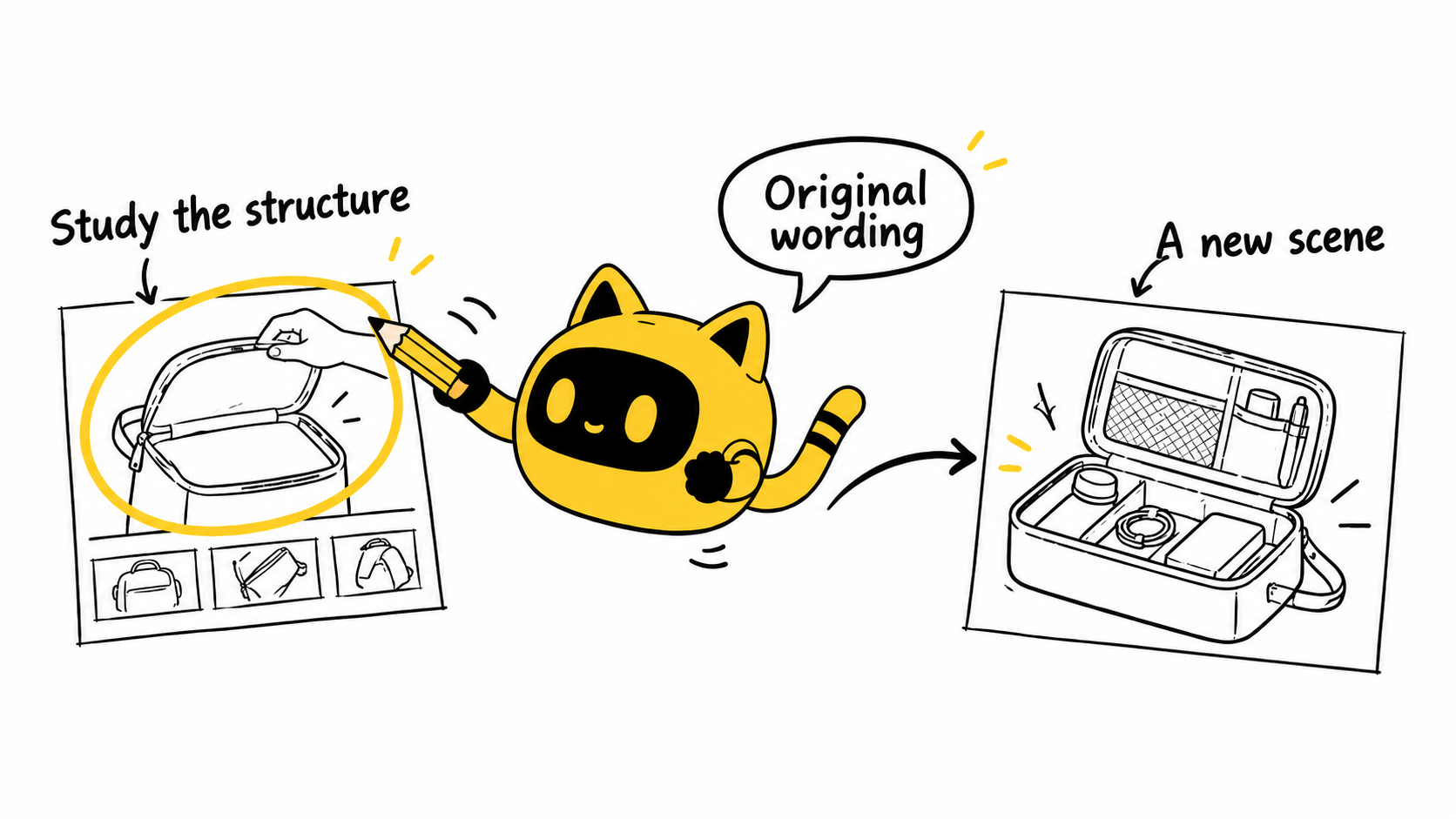
Confirm a new concept before filming
Ask the creator to briefly describe the opening, main action and ending. Evaluate whether that proposal serves the project’s objective, rather than whether every frame resembles the reference. Include wider brand-expression requirements in the pre-filming brief confirmation.
If a draft contains an unusually close passage or an experience that does not belong to the creator, ask about its source and development before requesting a supported, original rewrite. A common phrase alone is not enough to establish copying; swapping synonyms is not a meaningful creative resolution either.
Record the accepted concept and approver in OneCrew, retaining the older reference note. Prepare feedback that distinguishes what to keep, what to redesign and which facts are still needed, so the creator can act on it.
A reference-note template
Reference: [link and time range]. The element we want to learn from is [specific structure or filming technique], because it helps explain [this video’s objective].
Please develop new wording and shots around [our actual product, scene and facts]. The reference’s dialogue, music and third-party assets are not supplied as cleared material for this project. Before filming, please briefly describe your proposed approach so we can give one consolidated response.
Review against the objective, not a similarity score
Check whether the key action is understandable, product information is accurate and the execution follows the agreed concept. When requesting changes, explain the relationship to that objective. “It does not look enough like the reference” puts everyone back into guesswork.
For the next reference you save in OneCrew, add one sentence explaining which element matters and why. A precise reference note makes room for a piece that belongs to this collaboration.