Need Creator Content in 48 Hours? Check What Is Ready First
Check product readiness, brief approval and review time before agreeing a rush creator deadline. Includes scope options and a confirmation email.

Your campaign starts in two days. The creator has only just received the product, and someone on the team is already asking for the finished video tomorrow. Before promising a 48-hour turnaround, check whether production can actually begin—and whether the deadline means a first cut or an approved final file.
In a creator’s public question, repeated requests arrived before they had even had the product for a full day. The useful question for a brand is not simply “Can you work faster?” It is “What must be ready for this deadline to be realistic?”
Define when the clock starts and what it ends with
A workable starting point includes a usable product, an agreed brief, the required supporting information and the creator’s acceptance of the schedule. A delivery notification alone does not establish all of those conditions. If the content involves a period of actual use, agree how much time that requires too.
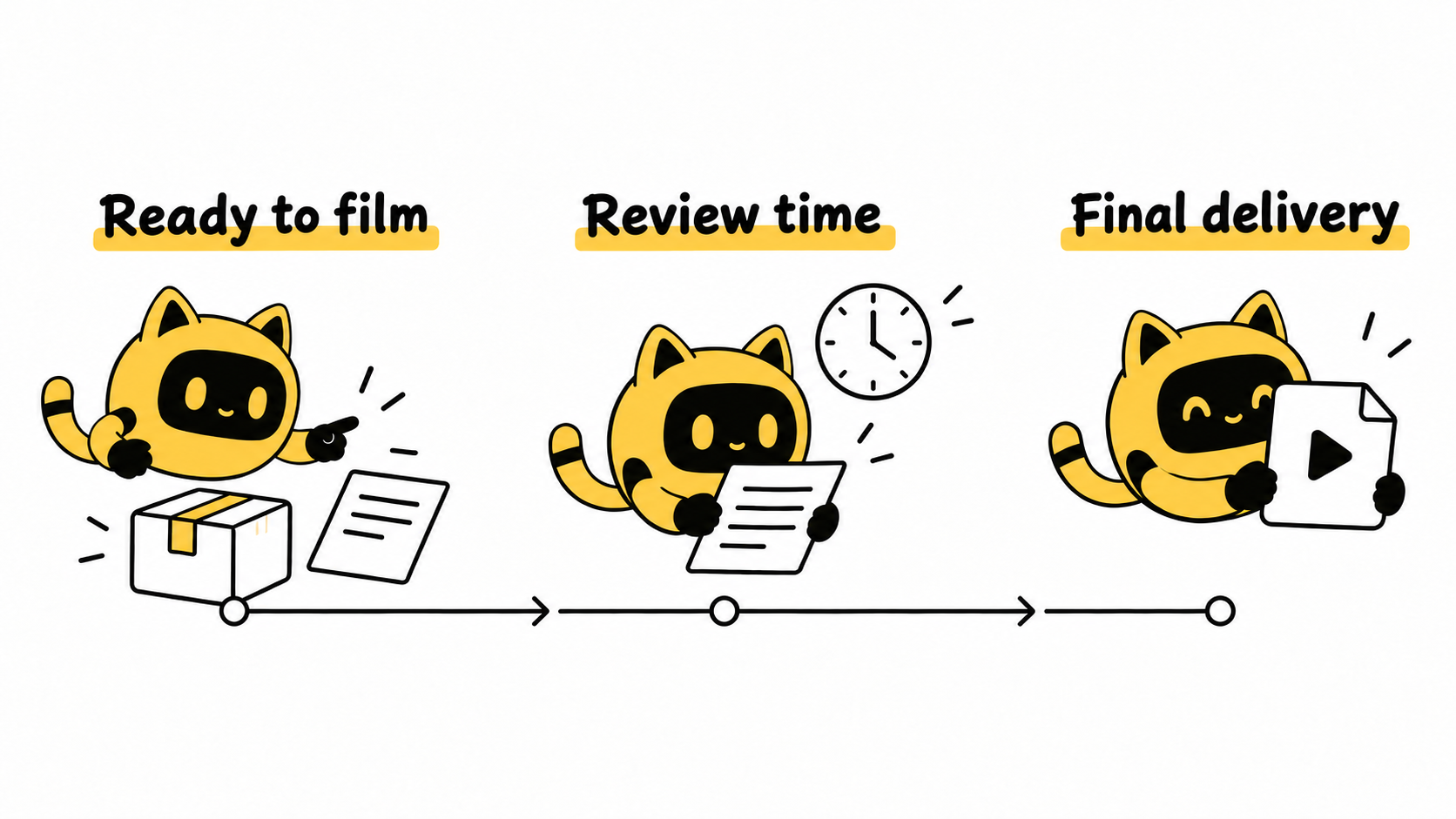
Then define the finish line. A review cut, a revised edit and a final export are separate steps. Put brand review time on the same timeline as filming and editing. Fast production will not compensate for an internal decision that nobody is available to make.
OneCrew is a workspace for creator information, collaboration records and email workflows. Record the starting conditions, confirmed dates and open questions in a project table, then check the existing email discussion for what each person actually agreed. A colleague taking over can see the dependencies behind the deadline.
Check four things before locking the schedule
- Product and setting: Can the product be used, and are any required locations, daylight conditions or additional participants available?
- Brief: Are the model, claims and required shots settled? Who can still request changes?
- Review: Who will consolidate feedback, and when can they respond?
- Delivery: Which files, formats, captions and transfer method are required?
For every item, write either the confirmed fact or the person you are waiting on. Avoid filling gaps with assumptions. The pre-filming brand brief checklist can help with the wider preparation; this check focuses on whether the proposed rush window is feasible.
If it does not fit, offer a real choice
Discuss a later delivery with the original scope, a smaller scope for this round, or an agreed intermediate review milestone followed by a separate final deadline. Staged delivery works only when both sides accept it. An unfinished file should not quietly become the final deliverable.
If the creator quotes a rush fee, assess it against the actual work and availability rather than applying a universal multiplier. If the product needs an extended trial, do not replace that experience with an unsubstantiated long-term testimonial. Change the content objective or move the project to a later round.
Keep the original request in OneCrew and add the alternatives being discussed. When preparing a reply, supply the genuine options and have the draft distinguish your proposal from a confirmed agreement. Review those details before sending.
A rush-project confirmation email
Hi [Name], we are hoping to receive [review cut/final files] by [date, time and time zone] for [specific scope]. The following is ready: [product, brief and materials]. We are still confirming [items and owners].
Could you confirm whether this is workable, including production and revision time? If the full scope will not fit, we can discuss [a genuine reduction] or [a later date]. Please share the feasible option and associated quote so we can agree the schedule before locking it in.
Reconfirm the affected steps when conditions change
A late product, revised brief or unavailable reviewer can change the plan. Record what changed, which step it affects and the proposed replacement date, then obtain confirmation. Do not add work while continuing to cite the original turnaround as though nothing has changed.
Start with the next rush project in OneCrew. Separate production readiness, review time and final delivery in the record. The next action should resolve a specific dependency or confirm a workable option—not simply repeat the request for speed.