How to Review a Creator's Spoken English: Clarity Over Accent
Assess understandable speech, accurate product explanations and recording quality. Includes sample-review criteria and a clearly scoped read request.

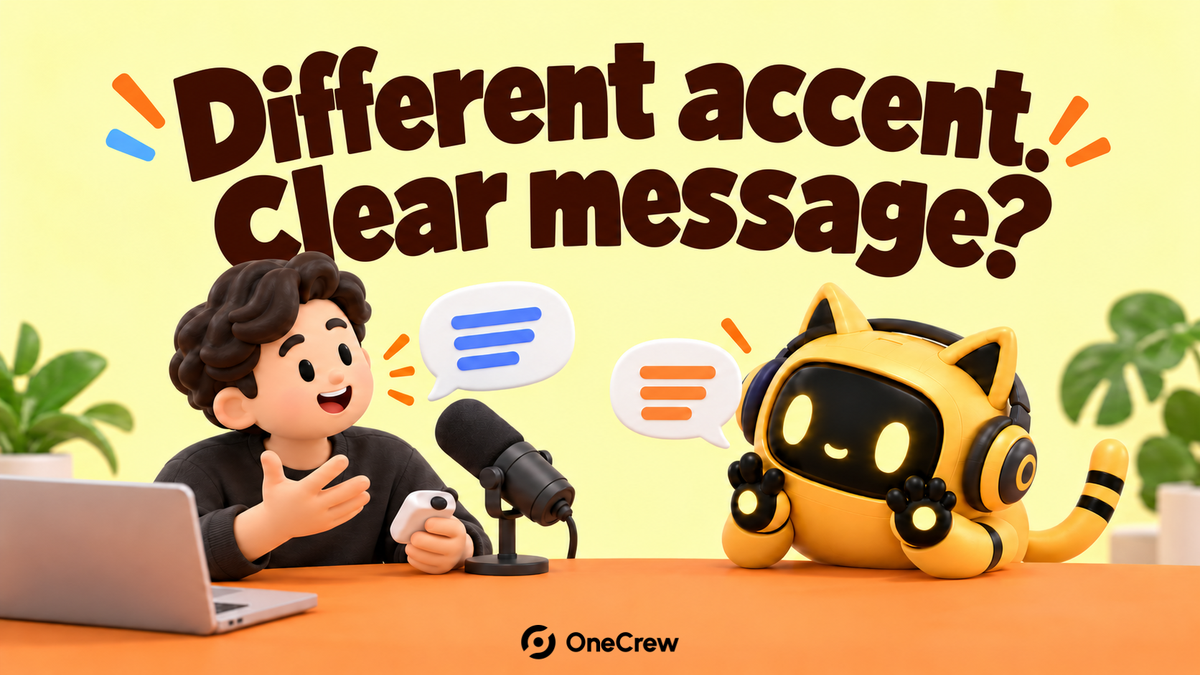
Should a brand reject an English-speaking creator because they have an accent? A more useful test is whether the intended audience can understand the message, whether the product explanation is accurate, and whether the delivery suits the content. An accent alone answers none of those questions, and nationality is not a proxy for ability.
A Brazilian creator's question described concern that an English accent might affect brand opportunities. For a brand, the practical lesson is to turn “good English” into observable requirements the creator can demonstrate.
Define what viewers need to understand
List the product name, essential function, action and limitations that must be communicated accurately. Specify the actual audience and context for a market-specific campaign. “Sound native” is not a clear content requirement. If a particular performance or language variety is essential, explain its relationship to the task.
OneCrew is a workspace for finding creators, organizing information and managing email communication. Save existing English-language examples with time stamps and specific observations. The team can then discuss the same passage instead of relying on a vague assessment such as “strong accent.”
Review existing work before requesting a sample
Choose examples close to the planned format. Listen at normal speed, check background noise and consider whether the demonstration supports the explanation. Supply the correct spelling and a pronunciation reference for unfamiliar product terms, then ask the creator to confirm them.
| Review area | Observable check |
|---|---|
| Comprehension | Can the intended viewer restate the main use? |
| Accuracy | Are names, functions and limitations correct? |
| Delivery | Do pacing, pauses and sentences suit the format? |
| Recording | Are noise and volume compatible with clear listening? |
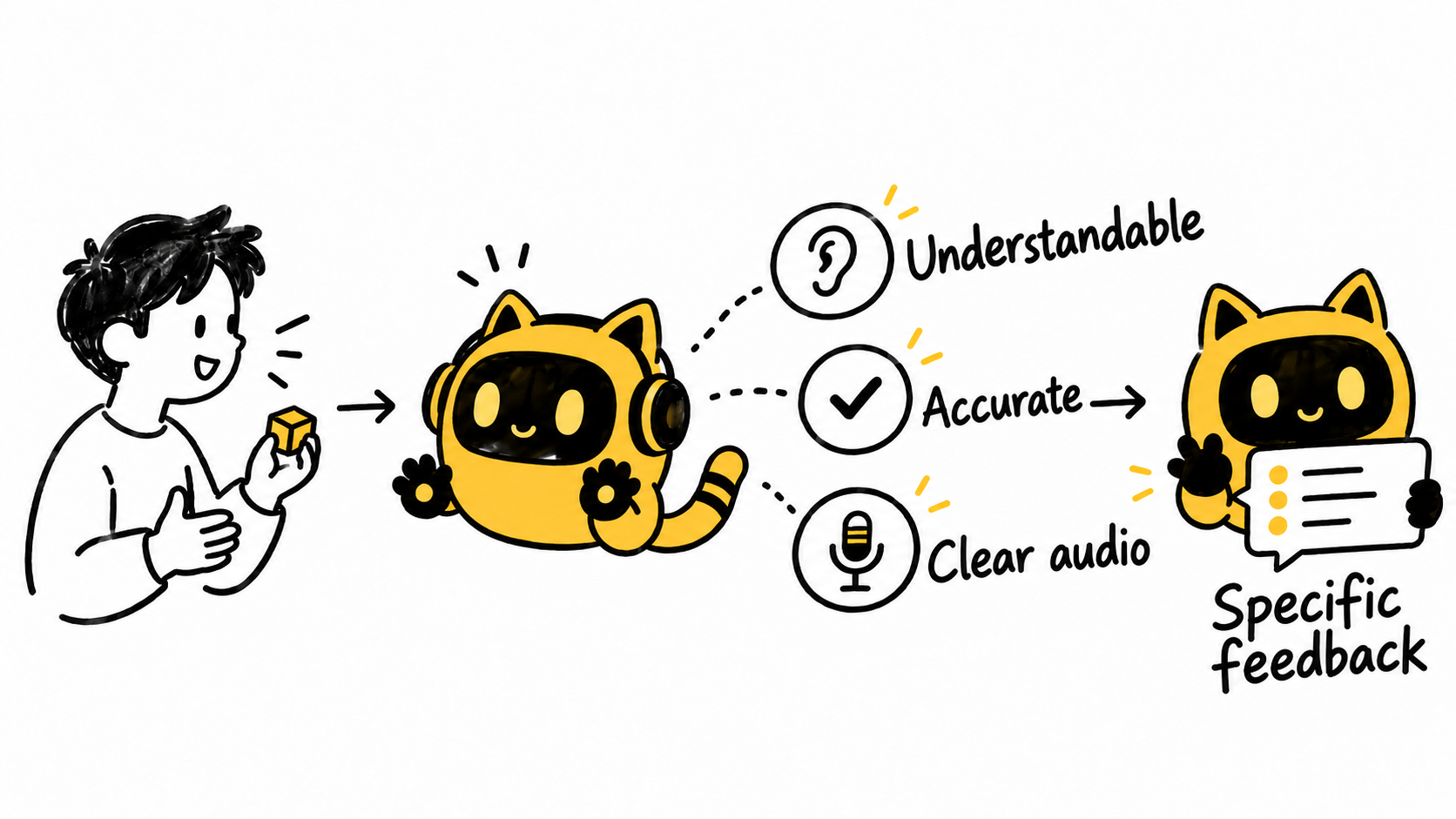
| Revision | Can a specific passage improve with clear feedback? |
These are content checks, not a ranking of language backgrounds. Captions can support understanding, but they should not conceal an incorrect spoken claim.
Keep any sample request small and agreed
If the existing work leaves a material question, discuss a short relevant read. Confirm length, intended use, timing, payment arrangements and whether filming is required. Do not disguise a complete production request as screening, or put a sample into live use without agreement.
We want to check that [product name or specific explanation] is easy to follow. Your example at [link] is close to the planned approach. Could we first confirm [specific words or sentences]? If a new sample is needed, we will agree its scope, timing, fee and permitted use with you before recording.
Ask your connected AI to prepare the clarification draft through OneCrew using your observations. Describe the change with a sentence and time stamp. “Could you slow this sentence down and split it in two?” is more actionable than “Make your English more standard.” Check the tone and agreed sample arrangements before sending.
Select for the actual content task
Have reviewers familiar with the language and target market apply the same criteria. Where useful, ask intended viewers what information they understood, rather than which accents they prefer. Record why the creator fits: a clear explanation, accurate content, suitable delivery and any product terms still to confirm.
Start in OneCrew with one candidate's examples and concrete questions, then prepare a bounded request. The brand onboarding checklist can help supply missing context before filming, so clarity becomes a practical production requirement.