A creator asked you to stop contacting them. How do you keep the next campaign from emailing them again?
Preserve a creator’s stop-contact request, carry it into new campaign checks, and review queued messages. Includes a practical internal handover template.

A creator asks for no more partnership invitations, and your teammate ends the follow-up. Months later, a new campaign starts with a fresh prospect list. The same creator appears again, ready for another pitch.
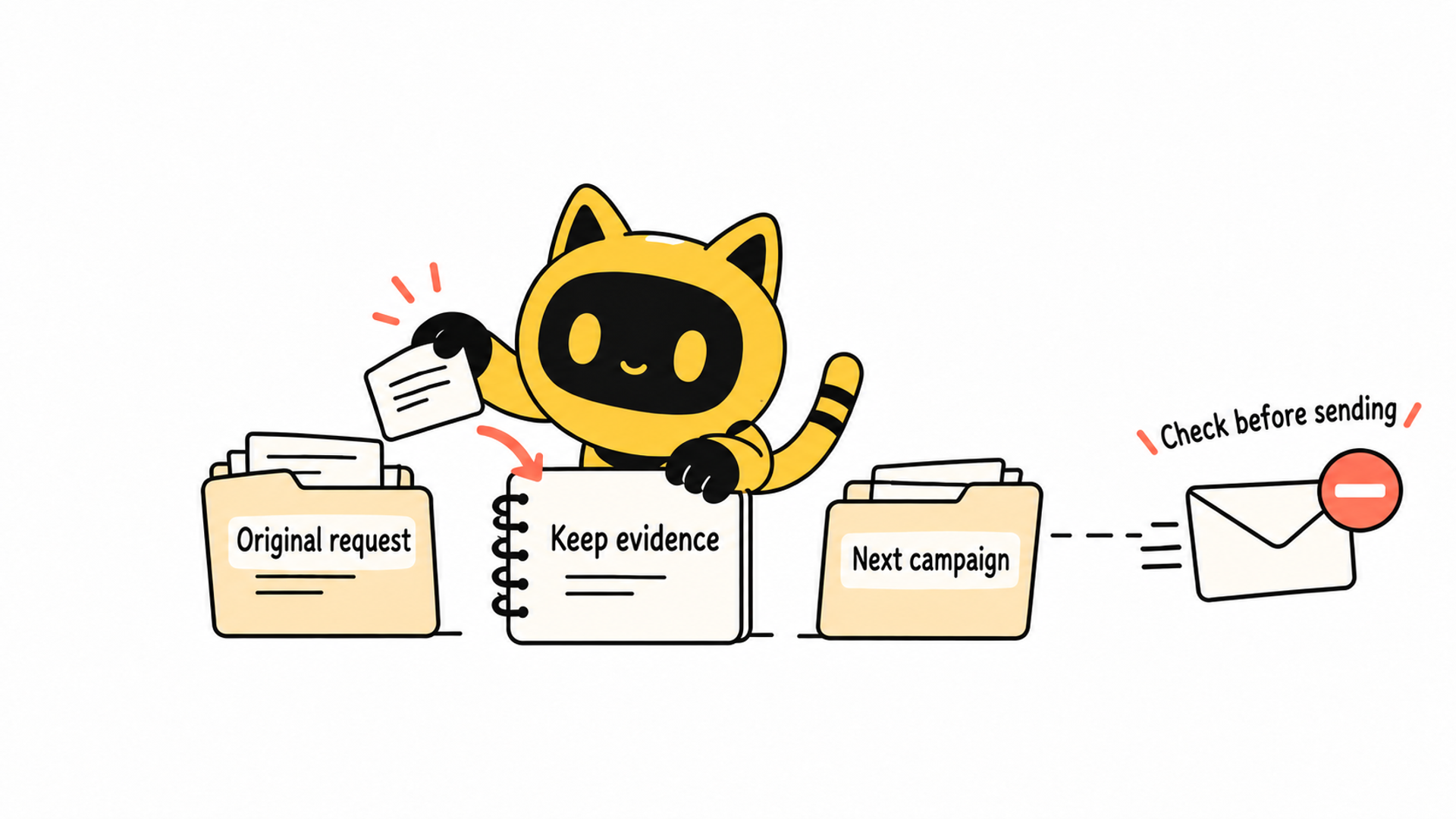
The request was left inside one conversation instead of carried into the next sending decision. Preserve the requirement and its evidence where the team can check it, then screen each new outreach list before preparing messages. Stop the relevant invitations first; don't wait for a perfect record to act.
Read what the creator actually requested
“This budget doesn't work,” “try me next month,” and “don't contact me again” mean different things. Don't collapse them into one rejection label or turn a stop request into permission to retry later. A different budget or a new campaign doesn't cancel what the person said.
OneCrew is an AI workspace that helps teams organize creator information and partnership communications. Ask an AI connected to OneCrew to read the recorded reply and extract its wording, date, channel, and stated scope. Review it against the original, then add the confirmed requirement to the creator's existing notes so the next person preparing an email can find it.
When the scope is unclear, pause the relevant marketing contact and review it internally. Don't send another sales message just to ask whether the person really meant no. Any necessary communication about unfinished work should be handled separately from new promotional outreach.
Keep enough information to recognize and honor the request
The record should identify the person and the action required, without becoming an unnecessary personal dossier:
| Field | What to keep |
|---|---|
| Person | Verified creator account and associated contact route |
| Original request | Necessary wording or message location, without subjective commentary |
| Scope | Brand, channel, or contact type explicitly mentioned; unresolved details flagged |
| Timing and owner | When received, who acted, and when checked |
| Completed actions | Drafts, lists, and sending services actually reviewed |
Limit access to people who need the information to carry out the request. Don't distribute complete mailbox histories or unrelated personal material. The UK ICO's guidance on respecting marketing preferences explains the role of suppression records. Determine specific obligations and retention arrangements under the rules applicable to your work.
Carry the requirement into the next campaign
Check incoming lists against verified accounts, email addresses, and known relationships. A fresh export may use another account belonging to the same creator. Equally, a similar name doesn't prove a match. Send uncertain identities to the responsible person for review.
Read the relevant creator notes and recorded replies in OneCrew before deciding who enters this campaign's draft preparation. Also check messages already queued in the actual sending services. Record what was changed, where, and when. “Handled” is less useful than an account of the completed actions.
Hand over the request and its implementation
Use an internal note such as:
Person: [Verified creator account/contact route].
Evidence: On [date], through [channel], the person requested [necessary wording or message location].
Action taken: [Owner] checked [relevant drafts, lists, or sending services] and completed [specific action] at [time].
Before future outreach: Check this record against the original request. Send a possible account match to [owner] for review before adding it to another invitation list.
If an acknowledgment is appropriate, keep it brief. Don't attach an offer, survey, or future collaboration pitch to a confirmation that contact will stop. Say the requirement has been implemented only after the responsible people have completed the checks.
When using OneCrew to prepare the handover note, ask the AI to preserve the distinction between completed and pending work. A sending service that hasn't been reviewed remains an action for its owner, even if the rest of the record looks complete.
Don't restore outreach on an assumption
If the creator later initiates a business inquiry, respond to that inquiry. Before changing the earlier restriction, establish the scope of the new statement and retain the evidence. A routine reply doesn't establish permission for every future marketing message.
Add this check to the creator partnership handover and duplicate-outreach review. One prevents redundant contact; the other ensures the contact respects the requirement already on record.
Start in OneCrew with one explicit stop request. Confirm that the notes preserve its wording, scope, owner, and completed actions, then make that record part of the next draft-preparation check.