How to Find B2B Creators: Start With Buyer Problems, Then Verify Platforms and Roles
Find B2B creators by turning buyer questions into search themes, then verifying recent content, professional role, platform, and public contact paths.
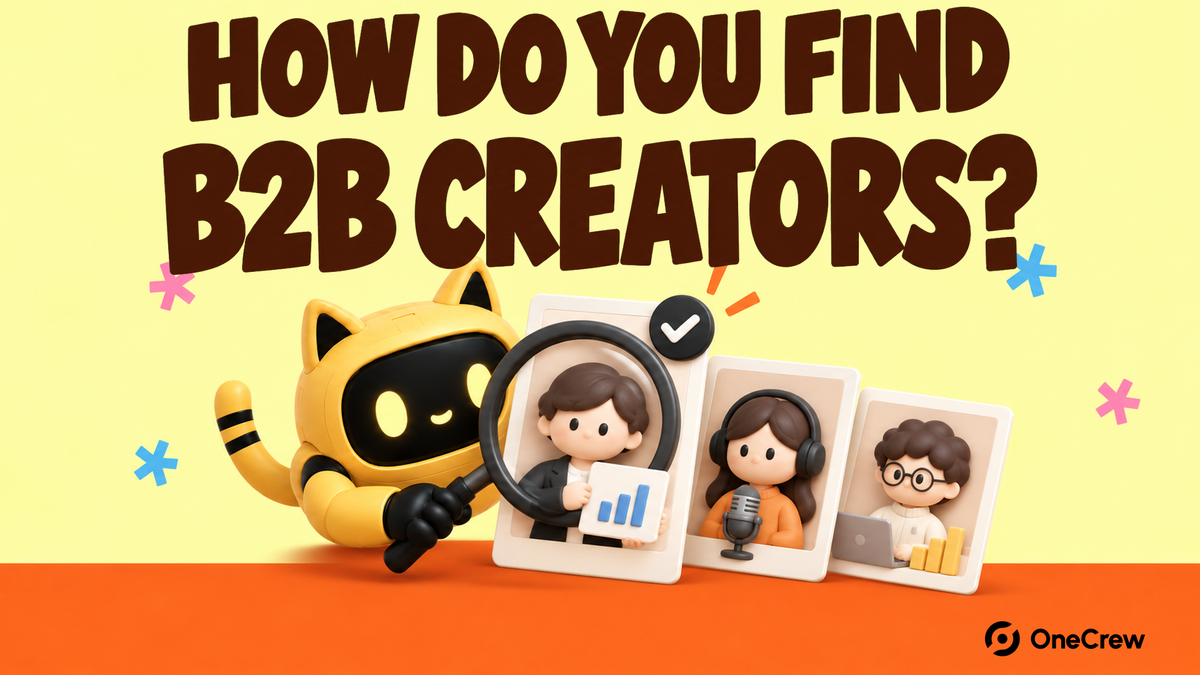
Finding B2B creators can feel strangely harder than finding consumer influencers. Broad databases may return plenty of lifestyle accounts, while the people who consistently discuss procurement, workflows, technical choices, or industry change are spread across LinkedIn, YouTube, podcasts, communities, and trade publications. A marketer raised the same problem in a public discussion: B2B creators are harder to discover, and the contact path is rarely in one place.
Turn “who should we find?” into buyer questions
Do not begin with “B2B influencer” or a platform filter. Begin with three to five questions your buyer is already trying to answer before a decision. A tool for design teams might start with design handoffs, component libraries, or no-code prototyping. A finance product might start with month-end close, cash-flow forecasting, or approval workflows. Add the product category, job role, and use case to each question to create search themes you can combine.
That shift changes the test from “does this person have a large following?” to “does their content show up in the buyer’s work?” Platforms are discovery paths, not the strategy. LinkedIn can surface professional conversation; YouTube can surface demonstrations and tutorials; podcasts can surface longer-running industry conversations. Search by theme first, then expand through related content, guests, comments, and citations.
This is also a practical point to use OneCrew. OneCrew is an AI creator-discovery and outreach workspace for global brands. Give it your market, buyer problem, and content signals in a natural-language task, review candidates with their match rationale, and decide which ones deserve more research. The result is not just a name in a spreadsheet, but a record of why the person may fit.
Treat job title as a verification signal, not the starting filter
B2B creators may call themselves consultants, operators, analysts, educators, hosts, or founders rather than creators. A role helps you interpret the audience, but it does not prove relevance. Review recent work and check three things: whether the person repeatedly covers a buyer-relevant subject, whether they offer actual analysis or instruction rather than only reshare content, and whether they have been active in the space lately.
Do not promote someone to the priority list on the strength of one viral post. In B2B, content continuity is often more useful than a single spike in reach. Likewise, a lack of visible brand collaborations is not automatically disqualifying; first establish the audience and topic fit, then choose an appropriate partnership approach.
Use three recent pieces to decide whether they really cover the topic
Do not rely on a bio or one popular post. Choose three recent public pieces, ideally from different dates and formats: one that explains a concrete problem, one that shows how the audience engages, and one that reveals the person’s working context or method. Write down two conclusions: which people and problems recur in their work, and why your product could credibly enter that conversation. If you cannot write the second conclusion, pause before outreach.
This also separates adjacent topics from a true audience match. Someone who covers general AI news may not be the right person to discuss a workflow for procurement teams. Someone who shares design inspiration may not talk about handoffs inside a design organization. Preserve the evidence before you rank the candidate, so teammates see more than a vague sense that the person “looks relevant.”
Subject: The best business contact for [specific topic]
Hi [Name],
I recently saw your work on [specific content] and would like to share a short collaboration overview around [buyer problem].
If someone else handles opportunities like this, could you point me to the best contact or email? I will send the overview only through the route you specify.
Best,
[Name / Brand]
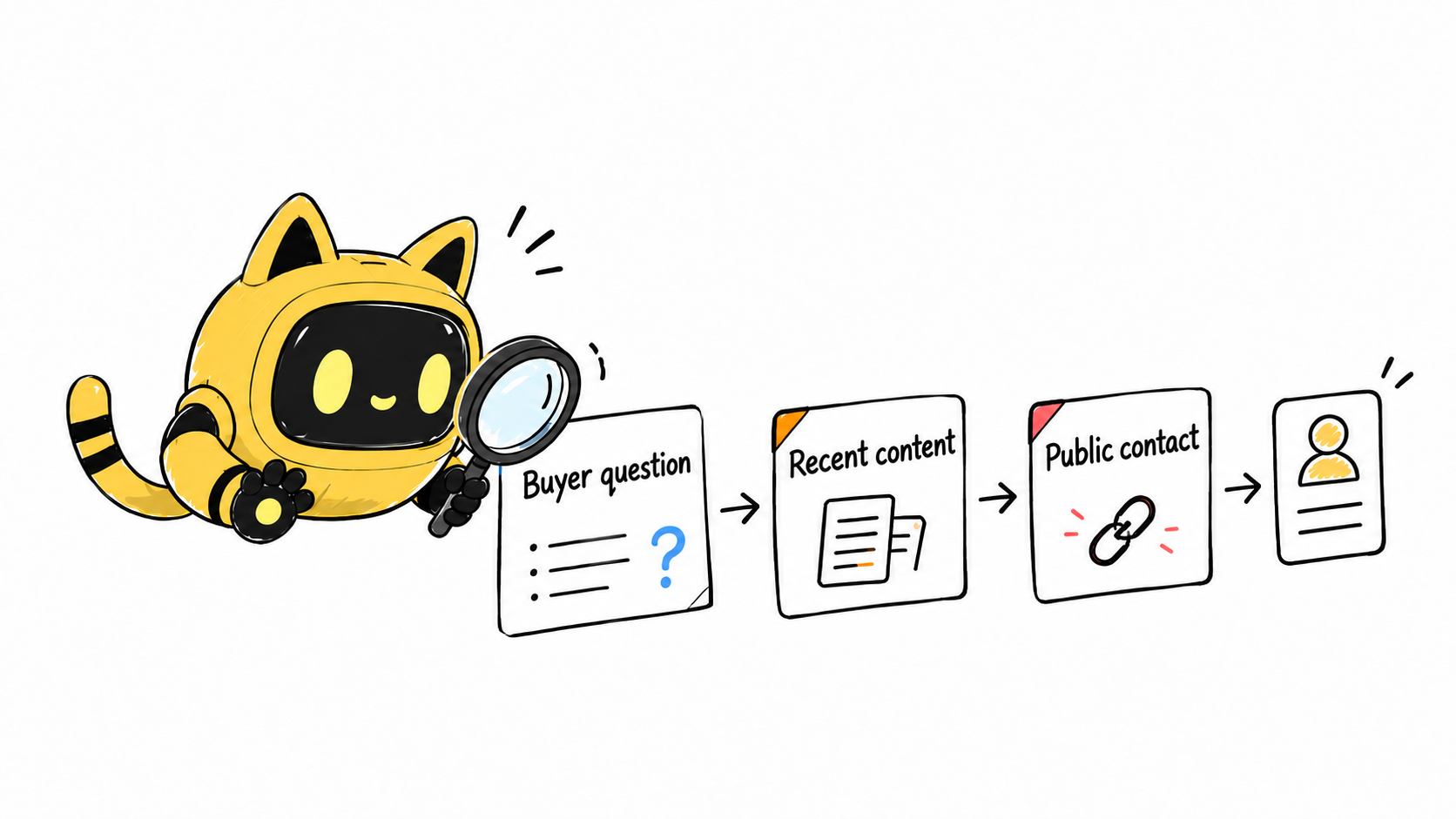
Use platforms to confirm content and public contact paths
Platform choice should follow the content format and contact route, not rule out a good candidate. If someone builds professional visibility on LinkedIn and publishes in-depth YouTube tutorials, keep both public profiles and the supporting content in the record. For outreach, use the business email, contact form, or platform messaging route the person has made public. Avoid treating personal information as a lead source or sending the same generic pitch through every channel.
A first note only needs to show that you did the homework: reference a specific topic they cover, name the buyer problem your product addresses, and offer a low-friction next step such as reviewing a one-page brief. That gives the recipient enough context to decide whether to reply and gives your team a consistent way to track each route.
First-contact template
Subject: A collaboration idea around [buyer problem / specific topic]
Hi [Name],
I saw your recent work on [specific post, video, or point of view]. We are working on [buyer problem] for [target buyer], and would like to share a one-page collaboration overview so you can decide whether it is relevant to your content and audience.
It explains the purpose, the product context you would need, and a suggested next step. If it is not a fit, a quick no is completely helpful too.
If you are open to it, please let me know the best business contact route or whether I should send the overview here.
Best,
[Name / Brand]
Replace only the bracketed details and verify that the referenced work is recent and public before sending. The template helps the recipient assess relevance quickly; it is not a message to copy unchanged across a whole list.
After the first reply, ask for only one decision-driving detail
When someone replies, “Please send more information,” do not attach every product asset, collaboration option, and long demo at once. Ask one question that determines the next step: would they rather review a one-page outline, take a short conversation, or have a manager assess it first? You can then send the material they selected instead of treating an open email as confirmed interest.
Subject: A one-page overview for [topic]
Hi [Name],
Thanks for getting back to me. To make it easy to decide whether this is relevant, I can send a one-page overview covering [buyer problem], the product use case, and the collaboration direction we would like to explore.
Would you prefer to review it here, or should I send it to [business email / manager]? If another detail would be more useful first, please let me know.
Best,
[Name / Brand]
Save the reply, chosen route, and next owner with the candidate record. OneCrew’s contact context lets the team see what has already been sent and what the recipient asked for before preparing the next message, rather than restarting from search results each time.
Keep a candidate record your team can revisit
A useful candidate record includes the buyer question or search theme, content link, recent-content assessment, professional role, primary platform, public business contact path, source, and next step. These are not spreadsheet decorations. They are the minimum context needed to answer why someone was selected, who owns the outreach, and what happened next.
OneCrew keeps creator details, public channels, and later conversations in one collaboration record. Start with one buyer question, build a small candidate set, add recent-content evidence and public contact paths, then review the first outreach. You do not have to choose between topic, platform, and professional identity: use the topic to discover people, content and role to verify them, and the platform to make an appropriate introduction.