How Should an Influencer Agency Track Brand Receivables and Creator Payouts?
Use one deal ID to connect brand receivables, agency commission, and creator payouts, with practical fields, exception rules, and follow-up templates.
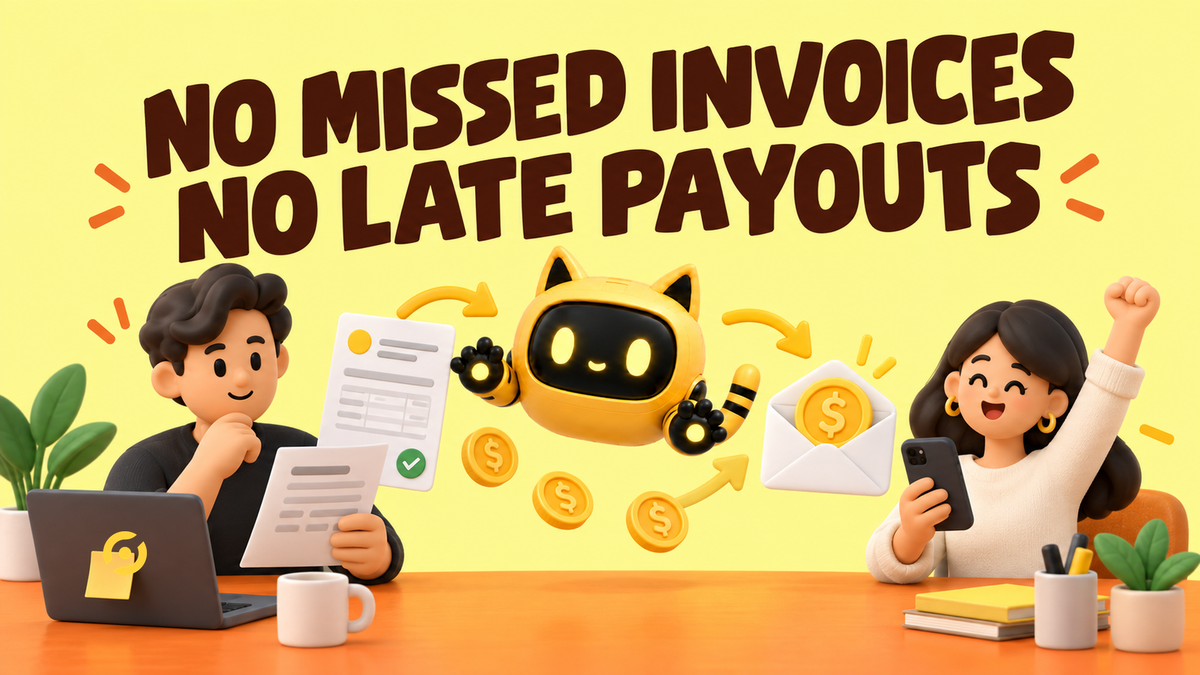
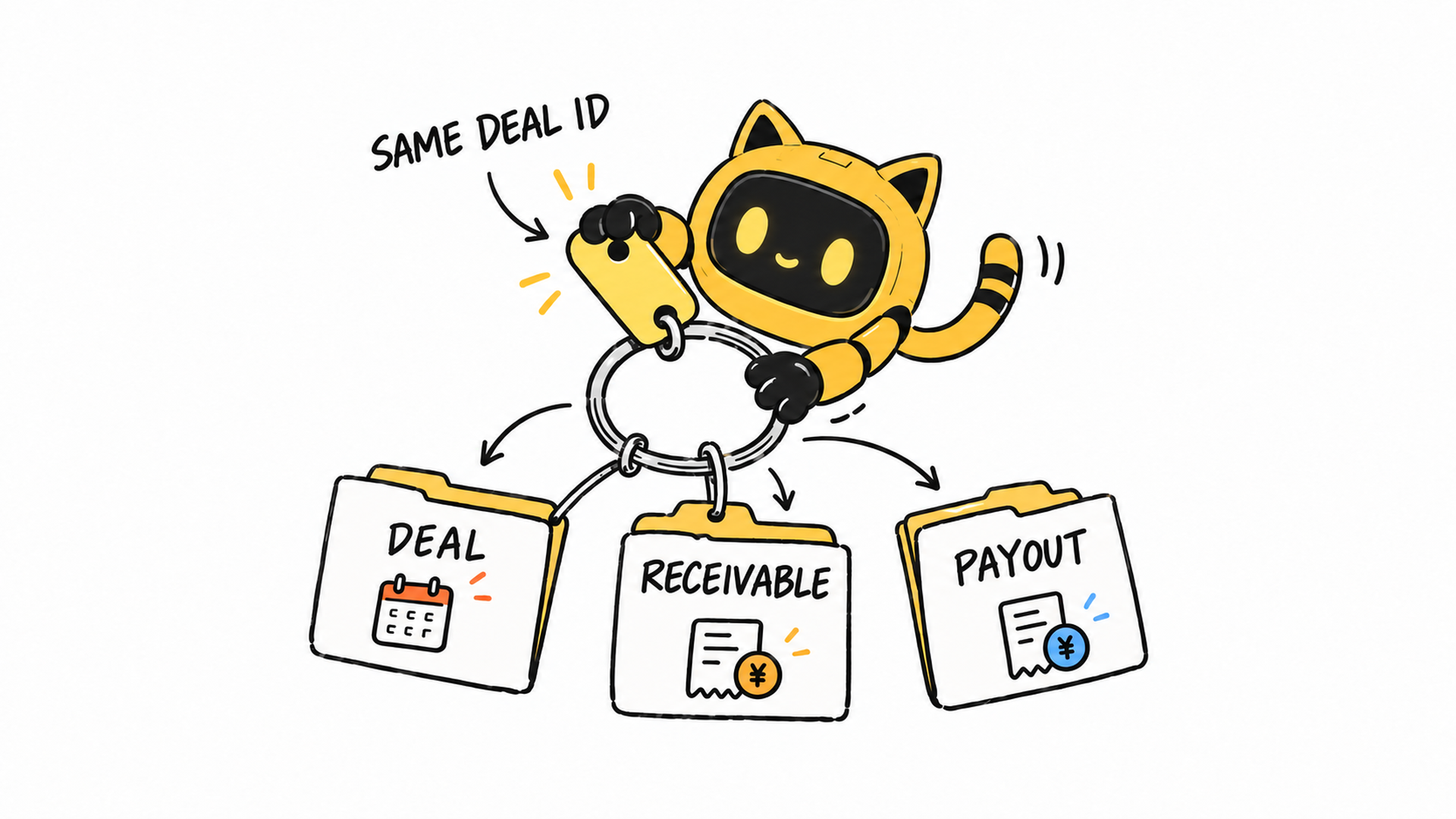
An influencer agency needs to track three connected but distinct things: the campaign itself, money owed by the brand, and money owed to the creator. The safest setup is to give every deal one unique ID, then use that ID across a campaign record, a receivables ledger, and a creator payout ledger. Your dashboard should answer four questions quickly: who owes whom, when is it due, what is blocking it, and who owns the next action?
Do not force all three workflows into one vague “paid” status. A brand can have approved the content without paying the invoice. The agency can have received a partial payment without clearing the creator payout. A bank transfer can have been initiated without the creator confirming receipt. Each state needs its own evidence.
Why do agencies still miss invoices when they already have a spreadsheet?
In a real question in r/influencermarketing, an agency operator managing about 15 creators described brand invoices, creator payouts, and cash flow spread across Google Sheets, email, and memory. Overdue invoices were missed, and creator payments were delayed as a result. The problem was not the color of the spreadsheet. Three different timelines had been collapsed into one:
| Timeline | Starts when | Important events | Ends when |
|---|---|---|---|
| Campaign delivery | The parties confirm the deal | Product shipment, draft, revisions, publication, approval | Delivery is accepted in writing |
| Brand receivable | The invoicing condition is met | Invoice issued, due date, follow-up, payment, reconciliation | Funds arrive and are matched to the invoice |
| Creator payable | The creator’s payment condition is met | Creator invoice, approval, payment queue, transfer, receipt confirmation | Payment evidence is complete and the creator confirms receipt |
“The client said they will pay next week,” “finance has scheduled it,” and “the video is live” are not settlement evidence. Record facts, not optimistic updates from a chat thread.
Step 1: Assign one deal ID and define the source of truth
Create the deal ID as soon as the campaign is confirmed. A format such as CLIENT-CREATOR-YYMM-01 works as long as it is unique and never reused. Put it on the contract, brief, brand invoice, creator invoice, email subject, payment evidence, and campaign record.
Then decide which system owns which fact:
- Commercial terms come from the signed contract or approved order.
- Delivery status comes from approval records and the live content URL.
- Receivable and payable amounts come from valid documents in the finance system.
- Payment status comes from bank records and finance reconciliation.
- Contacts, communication history, owners, and next actions live in the campaign workspace.
OneCrew is a creator discovery and outreach workspace for global brands and marketing teams. Teams can keep the deal ID, contact, conversation history, owner, and next action together in the creator and campaign record. When finance hears that a client will be late, the ID leads back to the full campaign context. When operations sees a payment blocked, the same record shows which contract or approval evidence needs to be supplied.
Step 2: Use one dashboard backed by three detail tables
A single sheet can work while every campaign has one invoice and one payment. Once you have installments, multiple currencies, scope changes, or several creators in one campaign, use a dashboard backed by separate records.
1. Campaign table: one row per deal
| Field | What to record | Why it matters |
|---|---|---|
| Deal ID | A globally unique value | Connects every related record |
| Brand, creator, campaign | Standard names and record links | Prevents nickname and duplicate-record errors |
| Owner | One accountable person | Every exception needs an owner |
| Delivery status | Product pending, in production, in review, approved | Shows whether financial conditions have been triggered |
| Receivable and payable totals | Rollups from the detail ledgers | Avoids conflicting hand-entered totals |
| Risk status | Normal, missing evidence, due soon, overdue, disputed | Sets today’s priority |
| Next action and deadline | A specific action, owner, and date | “Waiting” is not a plan |
2. Brand receivables: one row per invoice
At minimum, record the invoice number, deal ID, currency, tax basis, issue date, due date, invoiced amount, amount received, open balance, last follow-up date, next follow-up date, and payment evidence. The accounting system’s aging report tells you which invoice is overdue. The campaign record tells you which client contact to approach and which creator payments depend on it.
3. Creator payables: one row per payment obligation
Record the deal ID, creator, currency, contracted amount, approved adjustments, net payable, payment trigger, due date, date payment details were verified, transfer date, transaction reference, and receipt. Any change to payment instructions should go through a separate verification step instead of replacing trusted details based on one email.
Step 3: Derive status from evidence instead of editing it by hand
A tracker becomes unreliable when anyone can change a status based on memory. Define a small set of rules:
- Brand not yet due: open balance is greater than zero and today is on or before the due date.
- Brand overdue: open balance is greater than zero and today is after the due date.
- Brand settled: open balance is zero and the payment has been reconciled.
- Creator ready for payment: the contractual trigger is met and the net payable exceeds the amount paid.
- Creator overdue: an unpaid balance remains after the creator payment due date.
- Deal complete: delivery is approved, receivable and payable balances are zero, and the supporting evidence is complete.
Operations can update approvals, creator replies, and next actions in OneCrew. Finance updates invoices, bank receipts, and payments in the accounting system. The weekly review uses the deal ID to reconcile the two. If the records conflict, return to the contract, approval evidence, and bank transaction instead of voting on what everyone remembers.
Step 4: Test the workflow with one simulated campaign
The following numbers demonstrate the method; they are not industry benchmarks. Assume a brand contract of $12,000, an agency commission of 20% of the gross contract, and a creator payable of $9,600. Taxes, currency effects, and other costs are excluded.
| Date | Confirmed event | Tracker update | Owner |
|---|---|---|---|
| Sep 5 | Brand approves the content in writing | Delivery = approved; create invoice task | Campaign owner |
| Sep 6 | Invoice issued on Net 30 terms | Due Oct 6; open balance = $12,000 | Finance |
| Oct 1 | No payment received | Not overdue; send pre-due reminder | Brand owner |
| Oct 7 | Still unpaid | Brand = 1 day overdue; set next follow-up date | Brand owner |
| Oct 10 | Brand pays $6,000 | Partially paid; open balance = $6,000; keep original due date | Finance |
| Oct 20 | Remaining funds arrive and are reconciled | Brand = settled; start creator payout approval | Finance and approver |
| Oct 22 | $9,600 transfer sent | Creator = paid, awaiting confirmation; attach transaction evidence | Finance |
| Oct 23 | Creator confirms receipt | Payable = zero; complete final deal check | Creator manager |
The important part is not the amount. Every state has evidence, an owner, and a next action. A partial brand payment reduces the open balance without incorrectly marking the whole campaign as paid.
Step 5: Make commission and creator payout calculations auditable
The percentage is usually not the difficult part; the calculation base is. A contract may define commission on gross brand spend, creator fees, net cash collected, or a fixed service fee. Store four things with every calculation: the base, the rule version, adjustments, and approver.
- Brand open balance = invoiced amount minus reconciled receipts minus approved credits.
- Agency commission = the contractually defined base multiplied by the commission rate, or the fixed service fee.
- Creator net payable = contracted amount plus approved additions minus permitted deductions or withholding.
- Cash gap = creator payables due in the next 14 days minus confirmed available cash for those obligations.
When a reshoot, delay, or additional usage right changes the deal, add an adjustment record. Do not silently overwrite the original amount. Keep the reason, approval date, evidence, and before-and-after values.
Step 6: Hold one weekly exception review
The team does not need to read every row aloud. Filter for six exceptions:
- Content was approved, but no brand invoice was issued within two business days.
- A brand invoice is due within seven days, but supporting documents are incomplete.
- A brand invoice is overdue and has no next follow-up date.
- Brand funds were received, but creator payout approval has not started.
- A creator payment is due, but payment details or approval are missing.
- The campaign is marked complete while a balance or evidence item remains open.
Open the relevant OneCrew campaign, review the latest brand and creator communication, and write the next action as “who will do what by when.” Accounting platforms such as Xero can provide aging, bank reconciliation, and overdue reminders. The campaign team uses that financial status to handle the actual follow-up, missing evidence, and communication.
Two status emails you can use
To the brand: overdue without sounding emotional
Subject: [Deal ID] — confirming payment date for invoice [number]
Hi [Name], I’m following up on the invoice for [campaign]. The invoice total is [amount and currency], with a contractual due date of [date], and we have not yet matched the payment in our finance records. Could you confirm whether the invoice has cleared approval and the expected payment date? If a purchase order, invoice copy, or approval document needs to be resubmitted, please tell me which item is missing. Thank you.
To the creator: share facts and the next update date
Subject: [Deal ID] — payment status update
Hi [Name], here is the latest payment status for [campaign]. It is currently [approved / in payout approval / transferred], and our next confirmation date is [date]. The contracted payable is [amount and currency]. If your payment details have changed, please reply to let us know; we will verify the new instructions through the agreed process.
Frequently asked questions
Can an agency delay creator payment until the brand pays?
Check the agency’s contract with the creator and the law that applies. The brand receivable and creator payable are separate obligations. The tracker should show a potential cash gap before the creator’s due date so the team can act early.
How should OneCrew and accounting software divide the work?
OneCrew keeps creator contacts, communication history, campaign stage, owner, and next action together. The accounting system keeps formal invoices, bank reconciliation, tax records, payables, and transaction evidence. The deal ID makes the two systems traceable without forcing either one to do the other’s job.
When should one detail sheet be split into several tables?
Split it when a deal can have multiple invoices, installments, creators, currencies, or payouts. Keep one row per campaign in the master table and allow one-to-many records in receivables and payables.
Which three numbers should the team review every week?
Current overdue receivables, creator payables due in the next 14 days, and the cash gap between them. Pair those numbers with an owner and next action for every exception.
Start with the one deal that is already stuck
Choose one campaign that someone is chasing today. Give it a deal ID, then complete the contract, approval, invoice, receipt, creator payable, and next-action fields. Keep the brand and creator communication in the same OneCrew campaign context while finance retains the official amounts and transaction evidence. Once that deal moves cleanly from delivery to settlement, migrate the rest of the active pipeline.