Low-priced product, expensive creator quote: set a test budget
Set a creator test budget using contribution per order, complete campaign costs, and a clear stopping rule. Separate sales experiments from content purchases.
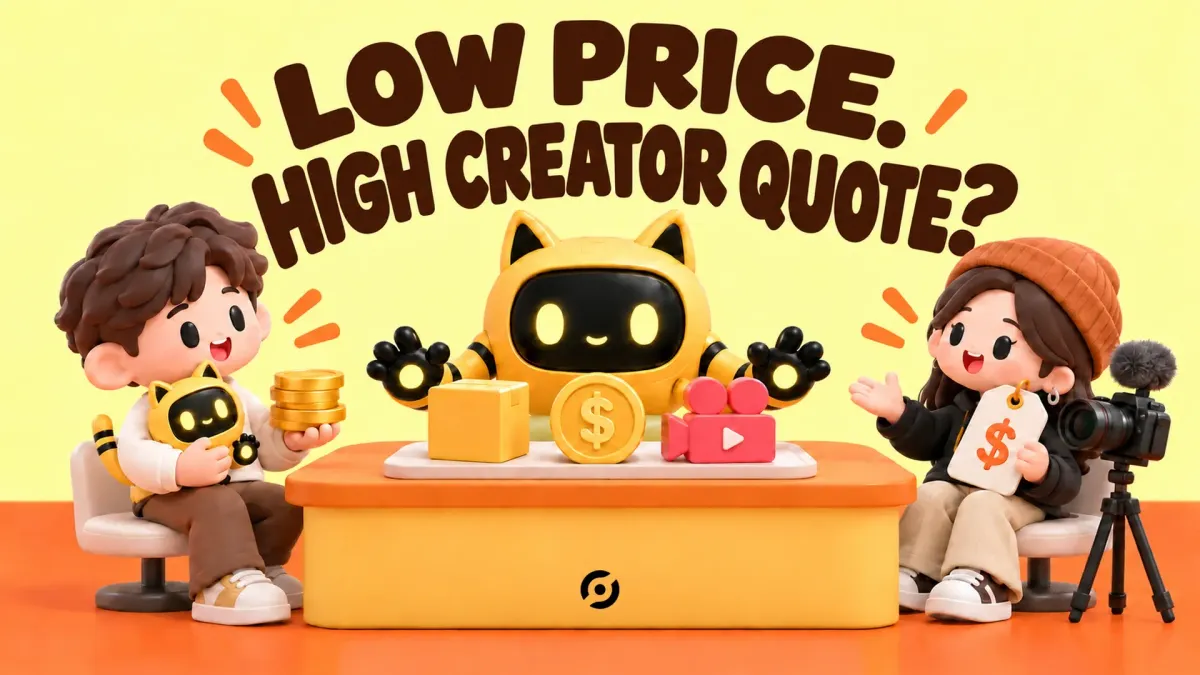
Your product is inexpensive, but a single video would cost the contribution from many orders. You have already paid for a platform subscription. Does that mean you should keep going?
A seller of lower-priced toys asked a similar question. Separate money already spent from the next commitment, then decide what that next commitment should help you learn. A forecast of views is not a forecast you can safely treat as orders.
Estimate contribution per order before setting the fee budget
Start with actual revenue received. Subtract costs that rise with each order, including the product, fulfillment, platform fees, discounts, and an allowance based on your returns experience. Include commission and document which costs are already counted. If contribution is zero or negative, more orders will not cover a fixed campaign fee.
OneCrew is an AI workspace for finding creators, organizing leads, and managing outreach. Give your connected AI the market, product use case, and proposed collaboration scope. Review candidates with clear fit evidence before saving a group. This keeps the outreach shortlist aligned with what you can reasonably offer.
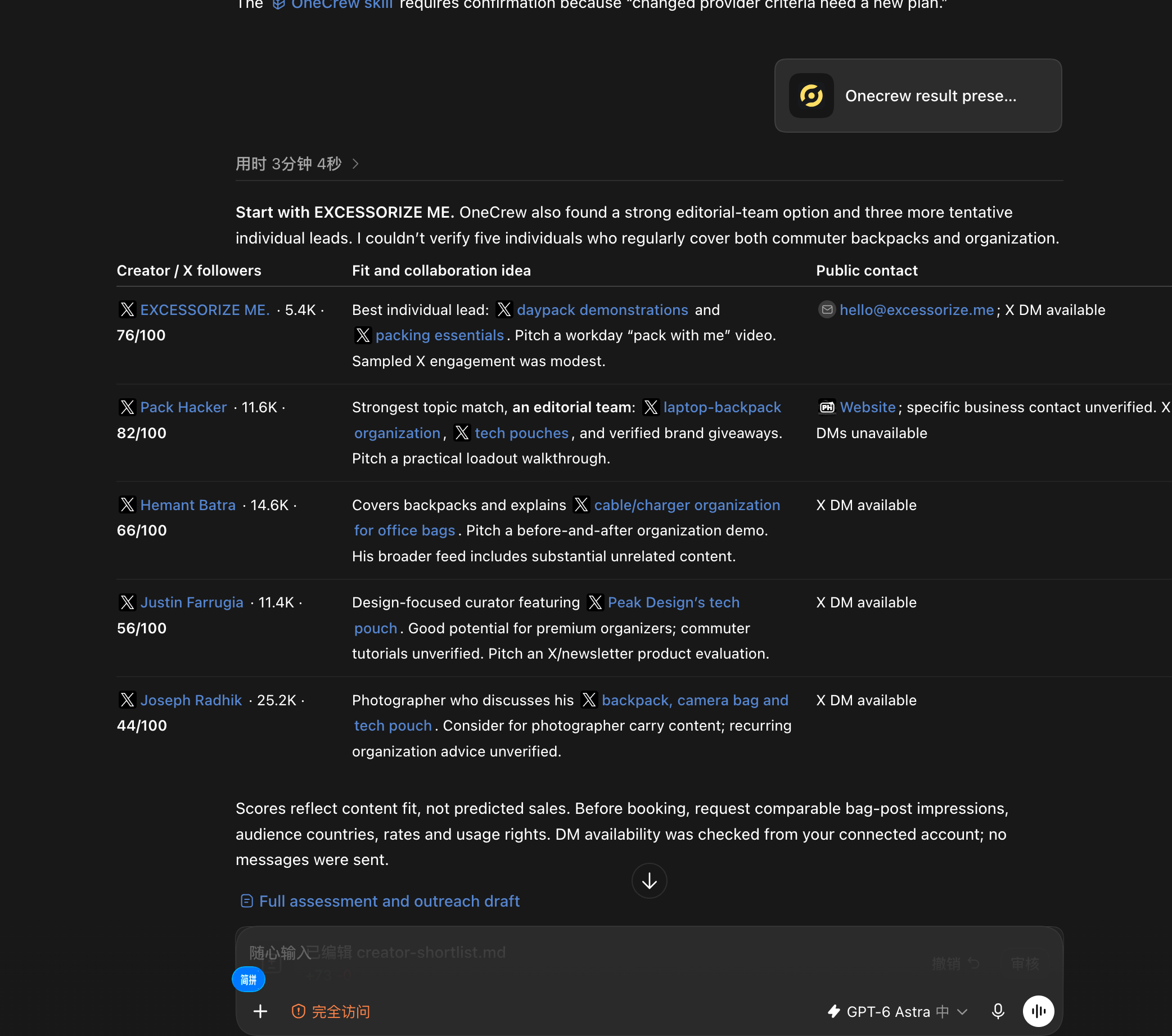
Before requesting quotes, build a shortlist you can explain. This Twitter/X example compares content fit and contact routes for commuter backpacks and bag organization; use your own product’s actual use case for the search. The scores do not indicate fees, audience purchasing power or expected orders. Verify relevance, then put the actual quote replies into your budget.
Use break-even arithmetic as a scenario
For illustration, a €6 contribution per order and €300 in additional fixed costs require 50 incremental orders to cover those costs. That is arithmetic, not a prediction that the creator will generate 50 orders. If incremental orders cannot be distinguished reliably, avoid presenting the result as proven payback.
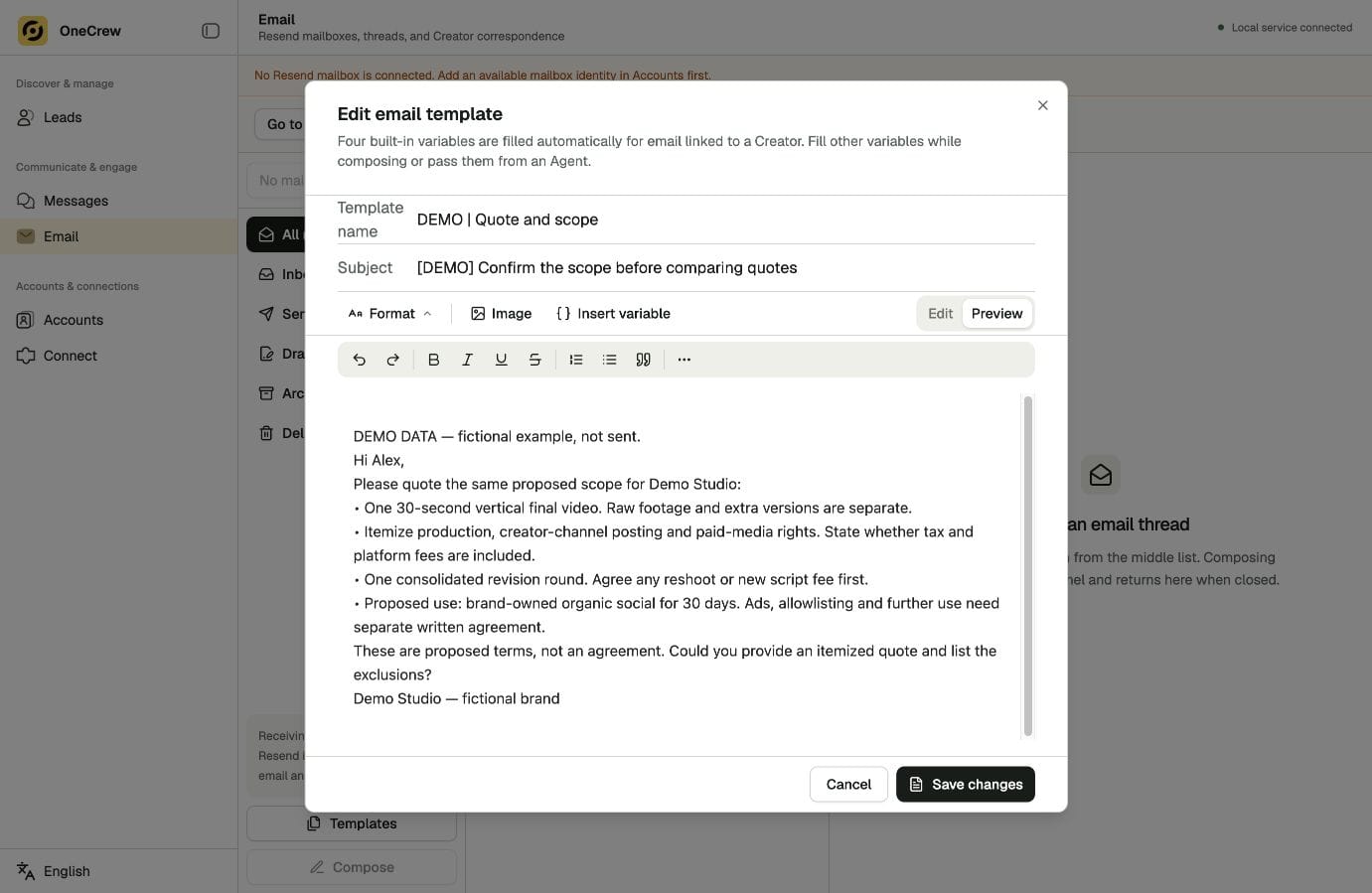
Prepare comparable quote requests in OneCrew, asking separately about production, deliverables, and content use. Check the replies before adding the amounts to your budget. A headline price for a video may not include everything your campaign requires.
| Budget item | Record |
|---|---|
| Past spending | Track separately from the next decision |
| New fixed costs | Production, samples, and other additional costs |
| Contribution per order | Revenue less the relevant variable costs |
| Review conditions | Evidence, timing, and reasons to pause |
Separate a sales test from buying useful content
If the goal is sales, decide beforehand what evidence you can inspect and when. If the goal is product demonstration footage, agree on files, versions, usage, and acceptance criteria. Both goals can exist, but do not replace the sales goal with “awareness” only after results disappoint.
Create OneCrew tasks for the evidence you need, such as confirming the asset list or requesting agreed performance records. Ask the AI to summarize open questions from the email history. Your review can then refer to goals that were actually established at the start.
Decide when to stop adding money
Set an exposure limit, a review date, and conditions for pausing another round. Missing product information or an unresolved deliverable is a reason to clarify the work before ordering more of it.
Use actual spending and completed deliverables to decide whether to continue. If you extend the review period, name the uncertainty that additional time is meant to resolve.
Use OneCrew to prepare a consistent quote request for a small group of suitable creators. Put their actual replies into the budget, then fund a test that answers one clear question at a cost you can accept.