How do you send an overseas creator a sample without leaving them an import bill?
Match your creator sample cost agreement to the actual shipping arrangement. Confirm the payer, explain unexpected charges, and prepare a clear dispatch note.

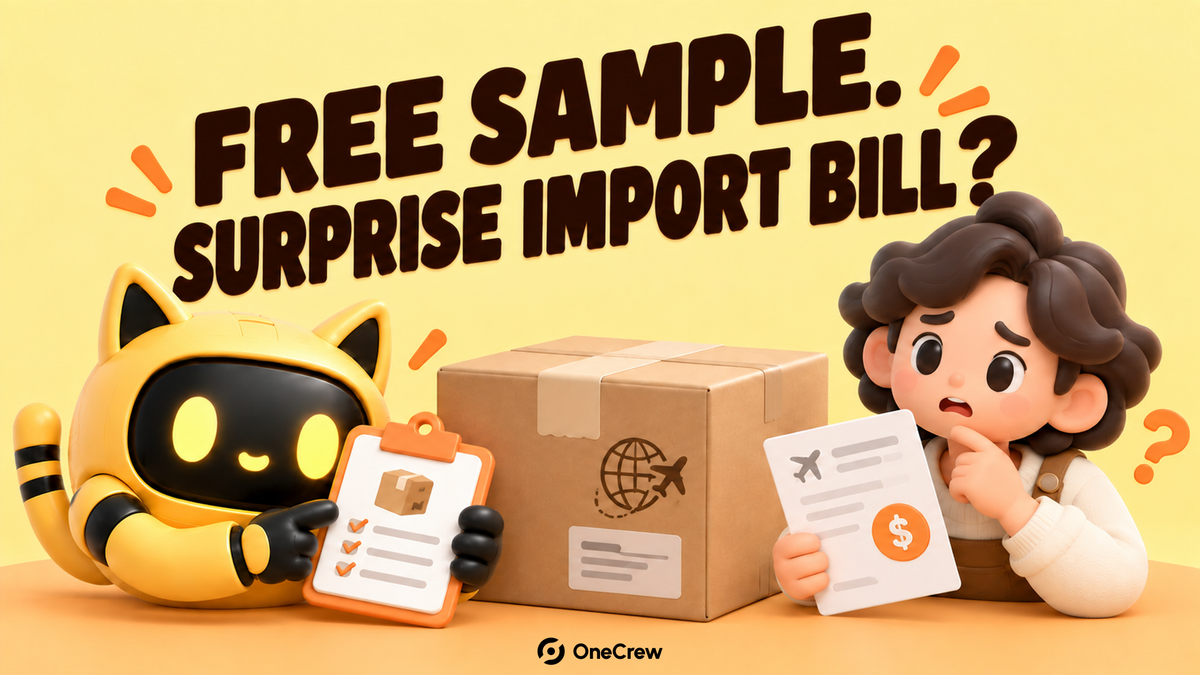
Your invitation promises a free product. At delivery, the creator is asked to pay import charges or a clearance fee. The item may be free while receiving it still costs money. Free shipping and no import bill for the recipient aren't necessarily the same arrangement.
Before dispatch, confirm two things separately: which costs the brand agrees to cover, and whom the carrier will actually bill. Put the first in the partnership record and implement the second in the shipment's service and billing setup. A reassuring email doesn't change a waybill.
Define the costs before confirming shipment
Alongside the product and transport charge, establish whether the brand covers duties, import taxes, clearance services, and any advancement fees. Ask the shipping owner which amounts can be estimated and which require confirmation later. Don't use “everything included” to cover questions that haven't been answered.
OneCrew is an AI workspace for organizing creator information and partnership communications. Ask an AI connected to OneCrew to review the recorded gifting agreement, then supply the cost scope verified by your logistics colleague. Have it prepare a shipping-confirmation draft. Review it before sending so product expectations, delivery, and cost responsibility are explained together.
If the available shipping service can't meet the arrangement already promised, change the shipping plan or discuss the terms before dispatch. Don't make an unexpected charge the recipient's default responsibility after the parcel is on its way.
Check the billing setup for this shipment
DHL's customs guidance explains that gifts and samples are subject to destination clearance rules, and that eligible arrangements can bill relevant duties and taxes to the shipper. Ask the carrier to confirm availability, setup, and included fees for the destination, goods, and shipping account involved.
Don't promise that no bill can arrive based solely on a service label. Have the logistics owner verify the transport payer, duty-and-tax payer, additional charges, required documents, and exception contact. Retain the answer for this shipment. A previous parcel going smoothly doesn't establish that a different product or destination will work the same way.
A sample supplied free of charge doesn't justify an arbitrary zero declaration. The shipping owner should use accurate descriptions, origin information, and a supported valuation under the current rules. Avoid blanket assumptions that gifts are exempt or that cost price is always the required declaration. If the creator must provide sensitive clearance information, direct them to a verified official carrier channel.
Match the agreement to the parcel
| Check | Source of confirmation |
|---|---|
| Product and receiving region | Brand details and creator confirmation |
| Costs the brand will cover | Explicit brand-owner agreement |
| Actual shipment billing | Logistics owner and carrier |
| Contact for an unexpected bill | Brand and logistics owners |
| Effect of a delay on production | Separate agreement with the creator |
This checklist supports coordination; it isn't a customs document. Share the delivery address only with people who need it for fulfillment. Use the shipment reference for internal handovers instead of distributing the recipient's full details to every participant.
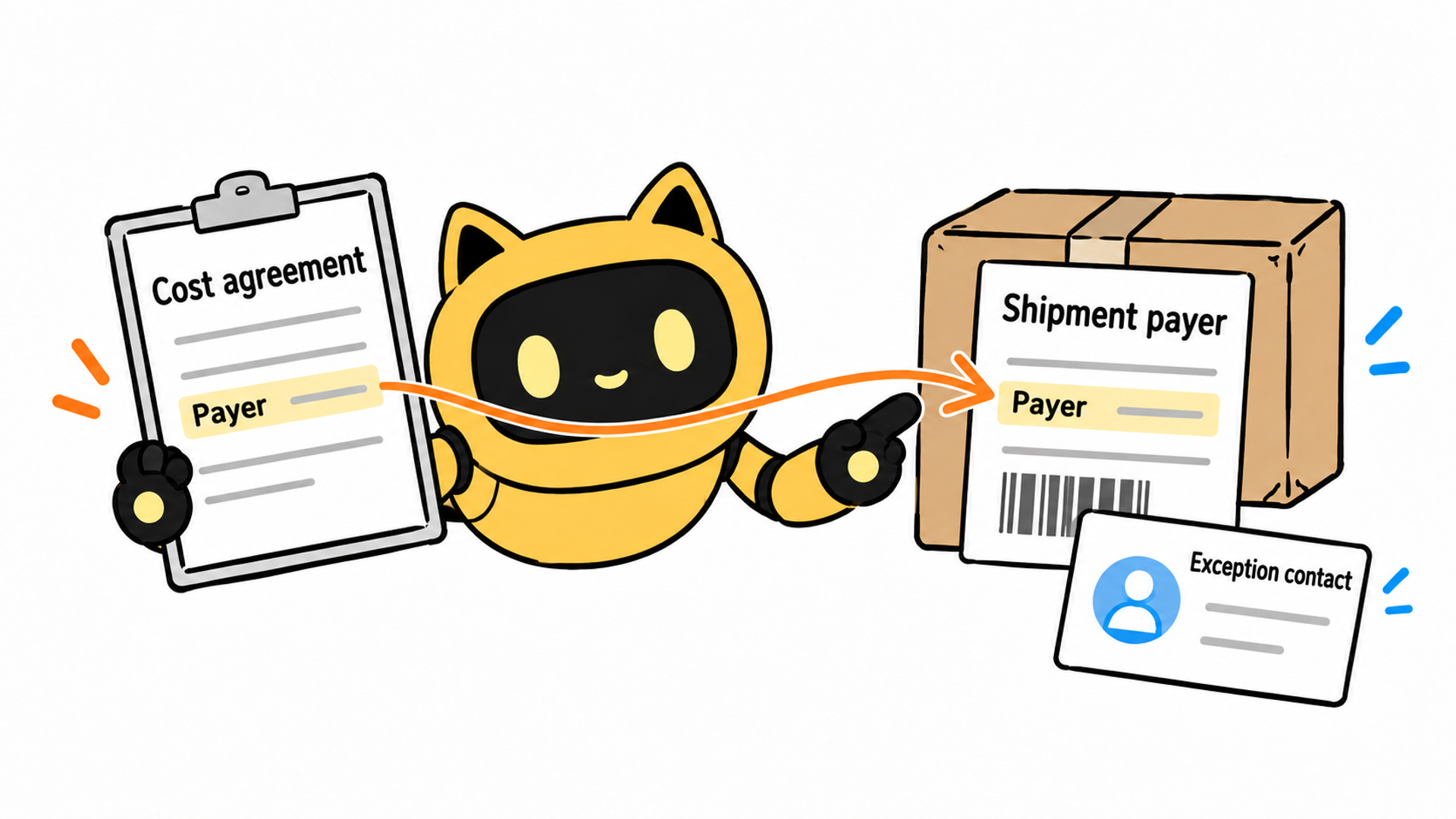
Preserve the existing creator notes in OneCrew and add the cost agreement, location of the logistics confirmation, and exception owner. Use those facts to draft a dispatch message explaining whom to contact if a charge appears. That gives finance, logistics, and the creator the same reference.
Explain the arrangement in ordinary language
We will send [product] to [confirmed region]. For this shipment, the brand will cover [explicit cost items], and [owner] has confirmed the corresponding shipping arrangement.
If you receive an additional charge or clearance notice, please contact [route] with the shipment reference, charge description, and notice date. We'll check it with the carrier and explain the next step. Submit any personal clearance information through the carrier's verified official channel.
If this delays delivery, we'll confirm the revised product-testing and content schedule together.
Use “confirmed” only after the arrangement has actually been checked. Don't write that all charges are prepaid in the hope that logistics will complete the setup afterward.
If a bill has arrived, verify it before promising a resolution
Request only the charge details relevant to this parcel. Verify the carrier notice and have the logistics owner check the fee type and shipment state. Don't direct the creator to an unfamiliar payment link or assume the fee is a duplicate without investigation.
Compare the finding with the original cost agreement. Decide whether the brand will handle it directly, ask the carrier to correct billing, or agree on another arrangement. If the creator has already paid, explain the evidence and internal process needed for the next step. Name the owner and a realistic update time without inventing a reimbursement date before approval.
Add the verified finding and creator's reply to the OneCrew record before drafting the follow-up. For broader sample expectations, use the creator gifting checklist. If production timing changes, use the launch-delay communication guide.
The practical test is whether the cost agreement matches the actual shipment. Start in OneCrew with one creator awaiting a sample, recover what was promised, ask the logistics owner to resolve the gaps, and prepare a dispatch message the recipient can rely on.