Creator Video Audio Is Unclear: Request a Remix or a Retake?
Locate unclear words and compare the source recording with the mix. Decide on a remix, pickup or retake using a checklist and focused revision email.


The creator's video looks good, but a key sentence is hard to hear. Asking for a full reshoot may create unnecessary work; asking for “noise removal” may not recover words missing from the original recording. Separate a mix problem from a source-recording problem, then request a remix, a targeted rerecording, or a reshoot with a defined scope.
Identify the missing information before naming a tool
Listen to the full video and note the timestamp, unclear words, and any music, environmental sound, or on-screen action at that moment. Check that playback volume is not simply too low. Compare on another common listening device if useful, keeping conditions reasonably consistent.
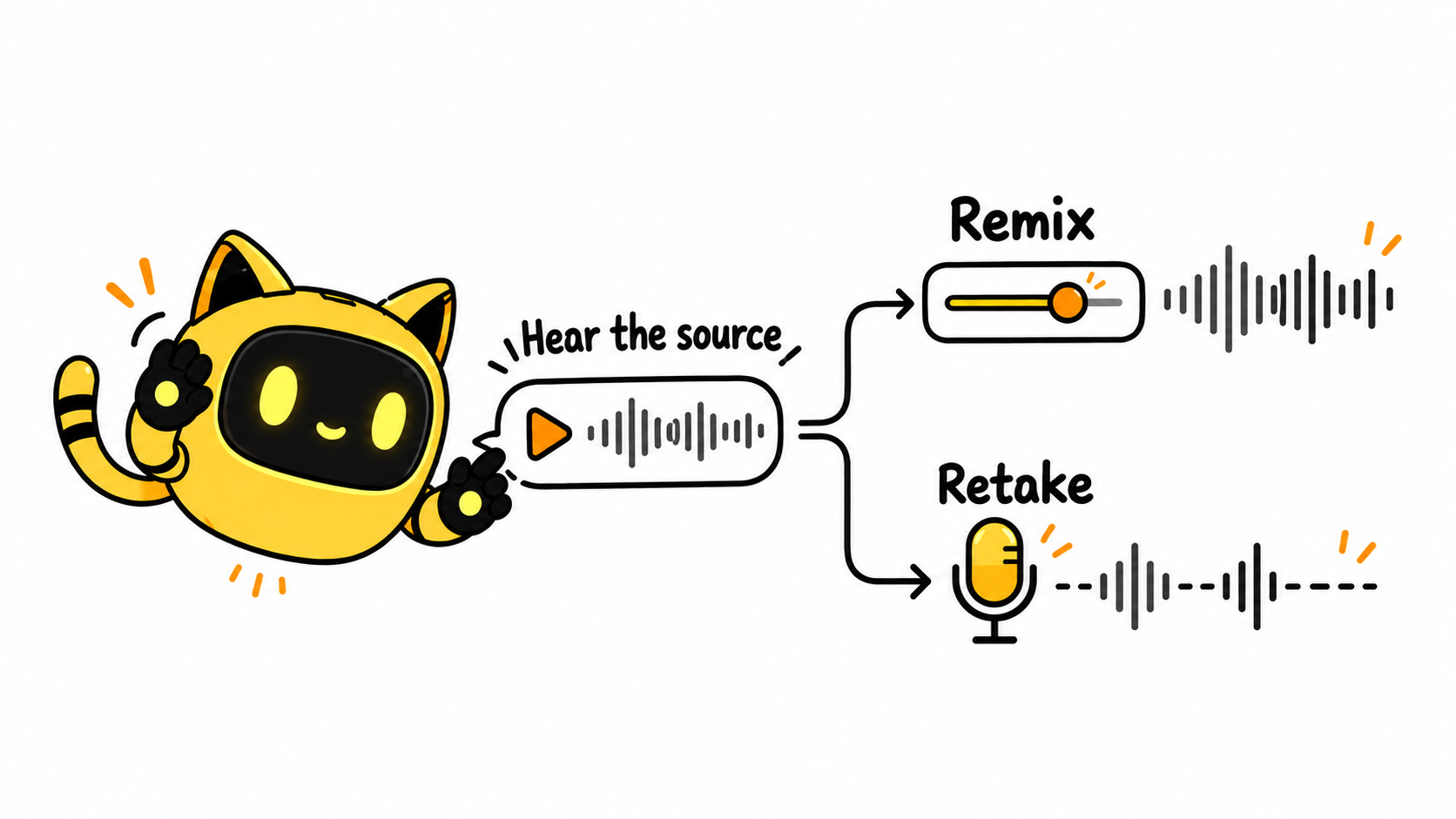
Ask whether the creator or editor has a clean voice track or original clip. If the source is clear and the music masks it, start by adjusting the mix. If words are missing, badly distorted, or obscured in the original, assess whether rerecording is needed.
OneCrew organizes creator collaboration records and emails. Keep the affected segment, intended words, asset version, and creator's explanation together. A revision draft can then address the real issue instead of asking vaguely for more professional sound.
Use the evidence to choose the next step
| Observation | First option to discuss |
|---|---|
| Clear source, voice masked by music | Adjust the mix and review the affected segment |
| Only a few words or sentences are affected | Assess a pickup recording, including tone and visual continuity |
| Important words missing or badly distorted in the source | Have production assess repair limits and whether to rerecord or reshoot |
| Audio is clear but the words are factually wrong | Correct the content; mixing cannot fix the claim |
This is a communication workflow, not a promise that a repair tool can restore any recording. A revised sample of the affected segment can make comparison easier before the whole video is exported again. Confirm whether the work falls within the agreed revision scope.
Check the picture before replacing the voice
If the creator is visibly speaking to camera, replacement audio may not match their mouth movements. A segment that can reasonably use existing product close-ups presents a different editing option. Ask production to consider wording, pace, tone, and the transition together.
If a reshoot is needed, specify which section must be redone and which footage will remain. An audio correction should not quietly become a request for new selling points or extra deliverables. If the brand also changes the script, identify that separately and agree on the added work.
Record the chosen method and scope in OneCrew, then use the original email thread to prepare consolidated feedback. The next review can assess the agreed fix without folding newly invented requirements into the same revision round.
An audio revision request you can use
In [version] at [timestamp], [specific words] are hard to hear, which affects the explanation of [information]. Please confirm whether the original voice recording is clear. If it is, first send the affected segment with an adjusted mix.
If rerecording is needed, please suggest the replacement scope, how it will join the picture, and the timing. We'll confirm this against [agreed revision scope]; there is no need to reshoot the whole video before we decide.
Finish by listening to the complete export
After approving the local fix, listen to the full export for abrupt changes, audible joins, and unintended effects elsewhere in the mix. Brand names, product conditions, and the call to action should be intelligible by ear. Captions can help, but their presence does not by itself resolve the voice problem.
If the picture is unclear too, separately check the file handoff and image quality before assuming both issues require a reshoot.
Start with one video awaiting revisions in OneCrew. Add the timestamp, source-recording assessment, and agreed correction scope. A precise description makes it easier to choose between a remix and a retake.