Hiring a creator to run your brand account? Agree on who does what
Agree on account ownership, production, approvals, publishing, and audience responses before a creator takes over. Includes a responsibility table and email.


You hire a creator to run a brand account. They agree to make videos every week. You assume that includes publishing and answering comments. After the first post, someone asks about a refund—and each side expects the other to respond. The missing piece is a clear definition of “running the account.”
Establish account ownership and access, then assign production, approval, publishing, and responses separately. Each task needs an owner, a timeframe, and a way to handle exceptions. A monthly fee does not explain those responsibilities on its own.
In a Reddit question, a creator compares delivering footage with creating and running a dedicated brand account, asking about ownership, workload, and payment structure. For a brand considering that arrangement, the practical starting point is a shared responsibility plan.
1. Identify the account and the person responsible for it
Write down the platform, account name, profile URL, and current administrator. Is this an existing brand account or a new account for the partnership? Who will create and hold it, maintain recovery details, and arrange the handover when the engagement ends? Have the brand owner resolve those questions, then confirm the arrangement with the creator.
Next, list the actions the creator needs to perform: upload files, save drafts, publish, read comments, or answer messages. The account administrator can arrange the necessary access through the platform’s current settings. Ask the creator to test the agreed actions. Keep passwords, recovery codes, and identity documents out of routine collaboration notes.
A creator responsible for making and uploading drafts should not quietly become an around-the-clock customer service contact. If responding to comments is part of the job, specify the response window, subjects they can handle, and the person who takes over other questions.
OneCrew is an AI workspace for organizing creator information, outreach conversations, and collaboration follow-up. Give the AI connected to OneCrew the account link, proposed scope, and relevant recorded messages. Ask it to separate confirmed responsibilities from unanswered questions and conflicting instructions. After checking the source messages, add the agreed plan and account owner to the creator’s existing notes.
2. Break account management into assignable tasks
Use the following table to describe your actual needs, then ask the creator to respond to each item. It is a discussion framework; the right allocation depends on the engagement.
| Task | What to agree | Record of completion |
|---|---|---|
| Ideas and production | Who proposes topics, supplies product facts, films, and edits; which assets are included | Current brief and file versions |
| Approval | Who consolidates feedback, when they respond, and what requires approval before publishing | Approval tied to a specific version |
| Publishing | Who uploads, schedules, and checks captions and links; which timezone applies | Live post URL and publication time |
| Comments and messages | Who checks them, during which hours, what they can answer, and when to hand off | Open questions and the person handling each |
| Exceptions | Who handles incorrect product details, complaints, or access problems | Decision, owner, and next update time |
| End of engagement | Who takes over unpublished content, open questions, and access changes | A confirmed handover checklist |
The brand’s own response deadline matters. If the creator submits on Wednesday and nobody approves the draft, should it still publish on Friday? Agree on the procedure in advance—for example, hold that version while the brand owner provides a revised plan. Do not leave either side to interpret silence as approval.
Ask the AI connected to OneCrew to compare the table with recorded replies. If the creator has confirmed two videos a week but has not answered who publishes them, the next message can focus on publishing. Keep source links alongside confirmed items and leave internal decisions marked as pending until they are resolved.
3. Define which audience questions to answer and which to hand off
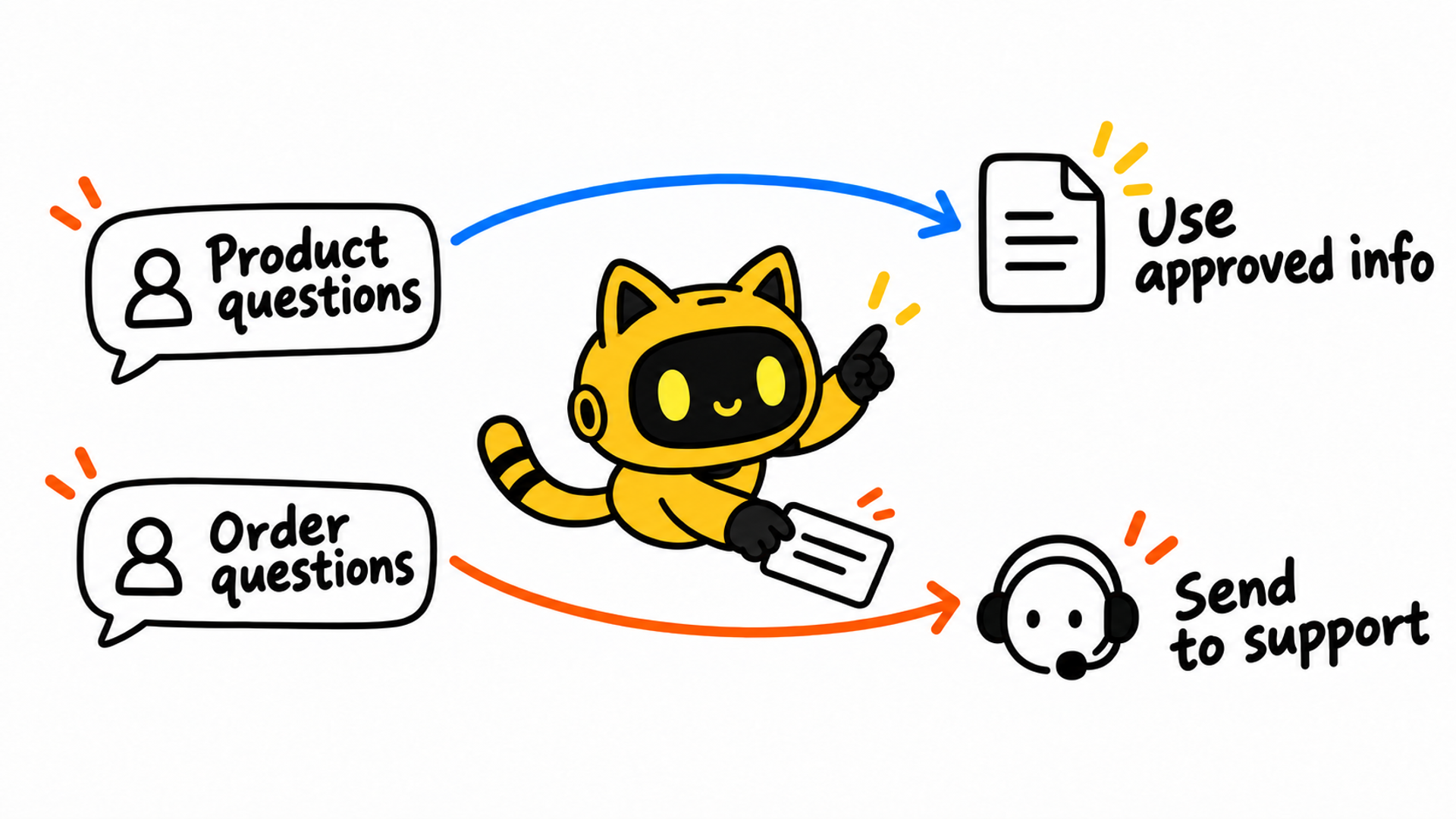
The creator needs a usable response guide, not an instant education in every part of your business. Supply verified product information and approved answers, then agree on the questions that should go to someone else.
Consider a hypothetical homeware brand. A question about dimensions can be answered from the confirmed specification page. A question about an individual refund goes to the brand’s customer service channel. A report of a product problem follows the brand’s agreed reporting process, rather than prompting an improvised refund promise or an unverified explanation.
Make each handoff specific: the question link, a short summary, the recipient, and the expected response time. Collect order details or personal information through the designated service channel. Collaboration notes can hold the status and relevant links without duplicating full customer records.
When preparing a follow-up in OneCrew, ask the connected AI to organize recorded messages into answered questions, items handed off, and items waiting for the brand. Check the summary and add it to the creator’s notes. Your next conversation can then address a particular unresolved question instead of asking whether “all the comments are done.”
4. Send a confirmation email people can answer item by item
A short email can make the working arrangement easy to review. Attach the current responsibility table and have the person responsible for the agreement check any formal terms.
Subject: [Account name] — confirming account management responsibilities
Hi [name],
We would like to work with you on [platform, account name, and URL] from [start date] to [end date]. [Owner] manages the account, and [administrator] will confirm your access by [date].
Your proposed scope is [specific planning, production, upload, or publishing tasks]. The brand will handle [information, approvals, and other responsibilities]. [Name] will consolidate feedback and respond within [agreed timeframe].
Comments and messages will be checked during [hours and timezone]. The topics you can answer directly are listed in [approved guide/version]. Please route order questions, complaints, and issues needing verification to [contact or channel]; [owner] will respond within [timeframe].
If approval is delayed or access stops working, please follow [specific process]. We will discuss fees and timing before adding work or extending the agreed response coverage.
Please review [responsibility table/version], confirm the tasks you can take on, and flag anything else you need from us. We will confirm the start arrangements after your reply.
The AI connected to OneCrew can prepare this draft from the creator’s recorded replies and your responsibility table. Check names, account details, timing, and the attachment version before sending. Record each answer separately; agreement to work together does not resolve every unanswered item.
For the recurring workload and commercial proposal, see the monthly creator partnership guide. The responsibility table explains who operates the account day to day; the monthly proposal places that work into a recurring production and feedback schedule.
5. Review the first week and plan the eventual handover
At the end of the first week, check actual examples. Who approved each version? Who published it? Which questions had no recipient? Did the work exceed the agreed scope? Discuss gaps as new arrangements, confirm any fee or timing changes, and update the plan.
When the engagement ends, identify who receives unpublished content, takes over unanswered questions, and collects the files and instructions. Name the administrator handling access changes and the agreed time. Confirm the handover results with both sides instead of simply marking the partnership complete.
Before asking a creator to run your brand account, use OneCrew to gather their existing replies and identify missing owners for production, publishing, and audience responses. Turn those gaps into a focused confirmation email so everyone starts with the same understanding of the work.