Existing customers are using a creator discount code. How should you count those orders?
Separate code redemptions, commission eligibility, new-customer status, and incremental sales. Reconcile current orders before agreeing on future changes.

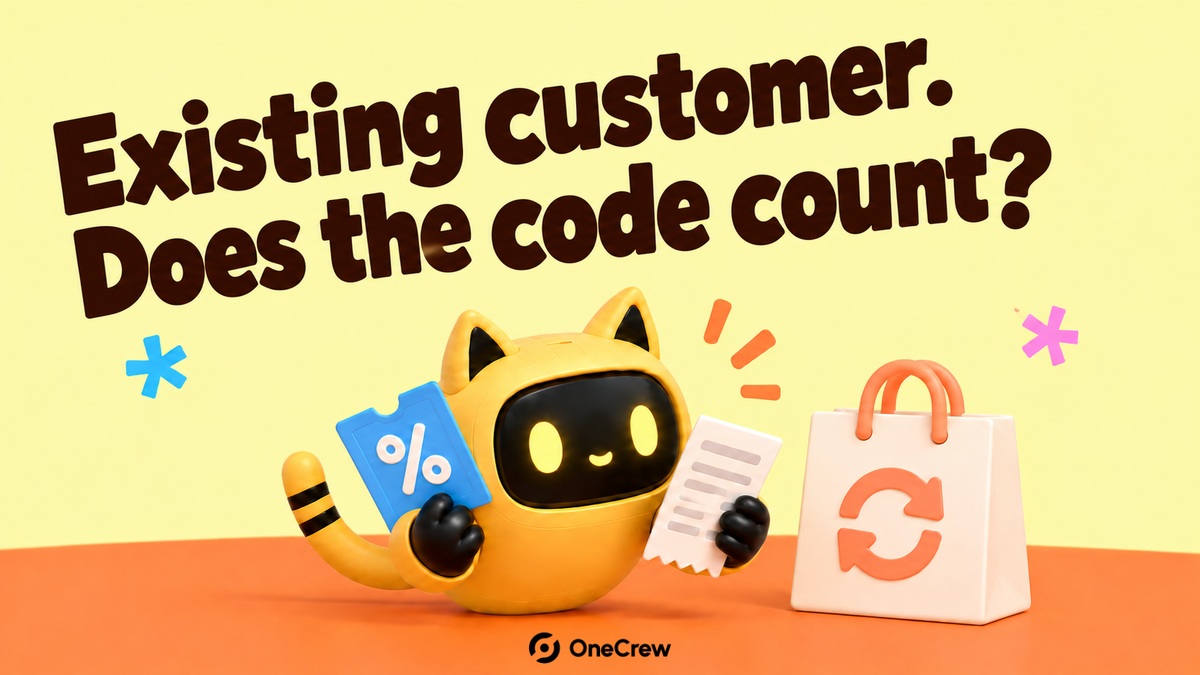
An order uses the creator’s discount code, but the customer has bought from you before. The brand worries about paying for a sale it would have received anyway. The creator expects an order using their code to count. Before debating who “brought the customer,” check what the commission agreement actually says.
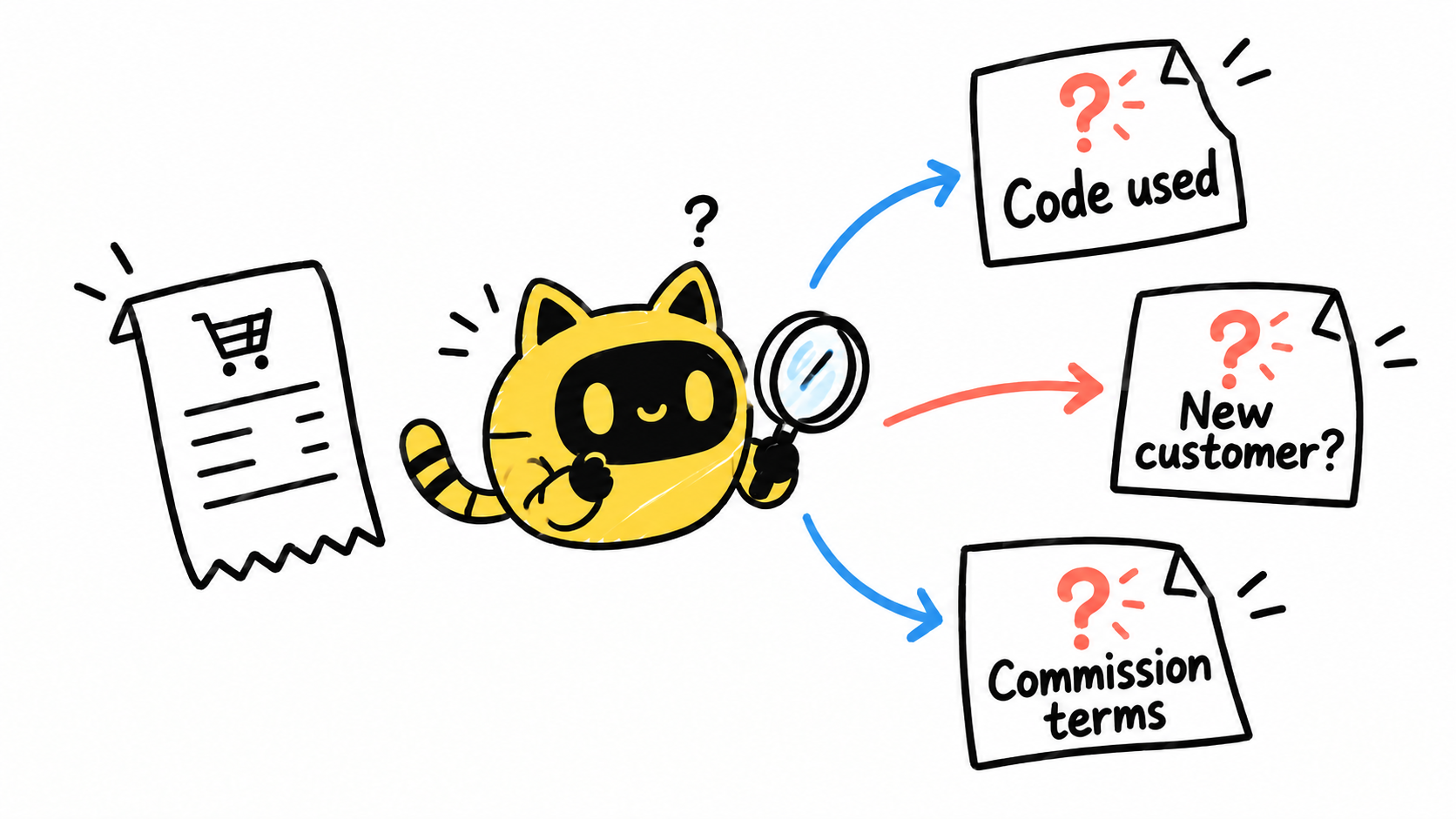
Separate four questions: which code was used, whether the order qualifies for commission, whether the buyer is new, and whether the promotion caused an additional purchase. A code redemption record can answer the first question. It cannot answer all four.
Find the settlement terms before labeling orders
A food merchant raised a similar concern about nutritionists sharing referral codes publicly: existing customers might find the code, creating commission costs the merchant had not anticipated. That concern is not evidence of misconduct. Creator programs face the same need for clear rules.
Locate the terms both sides confirmed. Do all qualifying code orders count, or only customers who meet an agreed definition of “new”? What happens to refunded or canceled orders? Which reporting period and reconciliation date apply? Mark missing terms as unresolved rather than supplying a rule after the fact.
OneCrew helps teams manage creator information and collaboration conversations. Review the recorded offer and settlement emails, then add the applicable terms, confirmation date, and source location to the creator notes. Preserve existing information and list disputed points separately. The ecommerce and finance owners should retrieve order data and make the settlement assessment.
Keep distinct conclusions for the same order
Treating every redemption as a new customer inflates acquisition reporting. Treating every existing customer as ineligible for commission may contradict the agreement. A short review table prevents those conclusions from collapsing into one another.
| Question | Main evidence | What it does not establish |
|---|---|---|
| Was the code used? | The order’s discount record | That this was the customer’s first contact with the brand |
| Is commission due? | Confirmed terms, order status, and reporting period | That the brand can change the rules because it now prefers acquisition |
| Is the customer new? | The agreed definition and reliable purchase history | That a different email address necessarily identifies a new person |
| Was the purchase incremental? | A suitable measurement design and broader evidence | That the purchase would not have happened without the promotion |
“Incremental” asks what would have happened without the promotion. An order export usually cannot settle that counterfactual. Label a report “code-attributed sales” or “new-customer orders under our current definition” when that is what the evidence supports. Do not rename the same data “additional revenue generated.”
For a hypothetical example, an existing customer watches a creator’s demonstration, buys again, and uses the code. You can identify a redemption and classify the order using purchase history. Commission depends on the agreement. Whether the content caused an otherwise unlikely repeat purchase remains a separate measurement question. This is an illustrative example, not a customer case study.
Reconcile the current period against a fixed version
Ask the ecommerce owner for the minimum information needed: internal order reference, timestamp and time zone, code, amount relevant to the terms, order status, and customer classification with its basis. Do not send the creator personal information that can remain within the internal review.
Have the settlement owner apply the existing terms. Use the agreed treatment for cancellations, refunds, and unsettled orders. If the terms have a gap, list the affected question, discuss it with the creator, and record the resolution. Do not introduce a new rule and use it to reduce compensation earned under the earlier arrangement.
In OneCrew, keep the data version, governing terms, confirmed findings, unresolved questions, and report location together in the creator notes. That gives the next teammate a way to avoid mixing a revised export with an outdated agreement.
Write a reconciliation email that does not presume fault
The template below starts with the finding and the terms. It does not assume existing-customer orders should be excluded.
Subject: Checking the code-order rules for [reporting period]
Hi [name], while reconciling orders using [code], we found some customers classified as existing under [current definition].
We’d like to check this against [confirmed email/terms and date]. The agreed commission scope for this period is [clear existing term], and [specific unresolved point] still needs clarification together.
We’ve prepared [review sheet without unnecessary personal information], using [period, time zone, and order-status basis]. Could you check whether it matches your records? We’ll review the facts and the original terms before confirming the treatment for this period.
If we decide to change eligibility for a future period, we’ll set out the rule, effective date, and examples separately and confirm them with you before applying them. Thank you!
Review the latest settlement conversation in OneCrew, then prepare the email for the confirmed contact. Link to the rule and ask the specific question that remains open. The responsible team does the accounting; the message helps both parties work from the same basis.
Decide separately who gets a discount and which orders earn commission
Restricting existing customers’ access to a discount and paying commission only on new-customer orders are different business choices. One governs the shopper’s checkout; the other governs the brand’s relationship with the creator. Changing one does not automatically change the other.
For example, Shopify’s amount-off discounts support customer eligibility and usage-limit settings. Have the store owner check the current options and test the intended checkout behavior. Those settings do not define your creator commission agreement. Shopify amount-off discount documentation
If a future arrangement will pay only for a defined set of new-customer orders, confirm:
- A workable definition of a new customer, including how uncertain cases will be handled.
- The codes, order types, and reporting periods covered.
- The shopper’s discount eligibility and whether public messaging matches it.
- The treatment of refunds, cancellations, and orders awaiting review.
- An effective date and the person responsible for getting the creator’s agreement.
Apply agreed changes prospectively. Keep old and new versions with their dates so the next reconciliation does not reopen the question of which terms applied.
If the next period also changes the commission rate, use the returning-creator commission update checklist to confirm the rate, eligibility, and effective date together.
Common questions
Does an existing customer’s redemption mean the creator added no value?
No. The content might have influenced a repeat purchase, or the customer may simply have found a discount. Name the metric accurately and evaluate it against the campaign’s objective. A commission dispute is not a substitute for performance analysis.
Does limiting a code to one use per customer make it new-customer-only?
No. Usage count and purchase history are different conditions. Check the store configuration, customer definition, and commission terms separately.
Open the creator’s commission agreement in OneCrew and record the code evidence, commission eligibility, and new-customer definition as separate items. Then prepare the reconciliation email. The same order can answer several different questions; keeping those questions separate makes settlement easier to verify.