Your Team Reused a Creator Video. How Should You Report Its Value?
Track actual placements, added costs and observed results when teams reuse creator videos. Includes a follow-up template and a practical OneCrew workflow.

The creator delivered the video and the campaign closed. Weeks later, the paid media team cut a segment into an ad, while the ecommerce team added it to a product page. Your report still shows only the original post’s views and attributed orders.
Document how the asset was actually used before assigning a value to that use.Keep confirmed reuse, additional costs and observed results separate. If you estimate avoided production spending, show the basis rather than adding it to sales revenue. This process covers reuse after delivery, within the usage scope already agreed with the creator.
If the usage scope is not yet agreed, review what to confirm before reusing creator content before proceeding.
Identify the original asset, then record each use
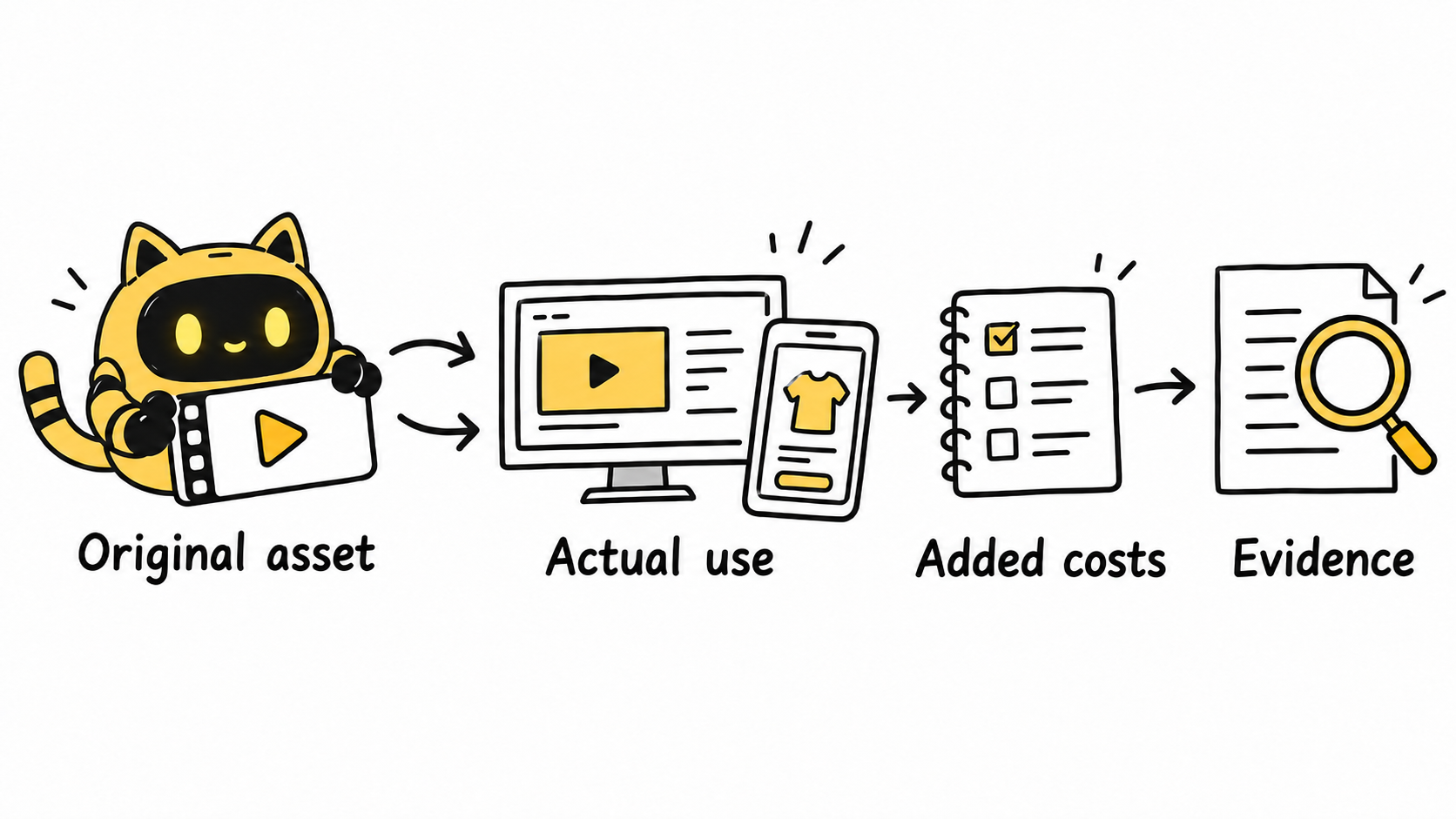
Keep the original file, creator, campaign, confirmed usage scope and expiry date together under an asset reference. For each reuse, record the version, placement, launch date, responsible team and a link or screenshot that can be checked. A video scheduled for next week belongs in planned use, not completed reuse.
OneCrew is an AI workspace for finding creators, handling email and maintaining partnership records. Give the AI connected to OneCrew your verified asset information. Have it read the existing table’s fields, then organize the details in the relevant records. Use the original asset reference to connect later usage entries to the partnership that produced them.
Agree on what you are counting. Two different edits can be two derivative versions. Sending one file to three colleagues does not create three new assets. If one version runs in several placements, record those placements separately while keeping a single reference to the original video.
Report three kinds of evidence separately
- Confirmed use: which versions actually appeared in ads, on product pages or on brand channels, when they ran and where the evidence is stored.
- Additional costs: extra usage fees, editing, subtitles, dubbing and recorded production effort. List ad spend separately rather than hiding it behind a claim of “free content.”
- Observed results: metrics supplied by the team using the asset, with the platform, reporting period and measurement definition. If the data is available only at campaign level, keep the conclusion at that level.
For sales figures, identify the report and the method used to associate orders with the placement. Do not add overlapping orders from separate reports. Orders attributed to an ad do not, on their own, establish how many additional orders the creator asset caused.
Ask the team using the asset for a complete record
“It worked well” is not enough to report. Ask for the version, placement, dates, costs and source of the results. Record missing information and who will supply it. An asset with no evidence of actual use remains available inventory.
Review the existing partnership email in OneCrew, then provide the usage list and ask the AI to prepare a request for the missing details. Keep the request specific rather than asking colleagues to resend information already confirmed. Check the links and reporting dates in their response before updating the record.
We are documenting subsequent use of [creator / asset reference]. Could you share the version used, its placement and launch date, and any additional costs? If a results report is available, please include the link, reporting period and metric definitions. Please mark versions that have not launched as planned use so we can keep them separate.
An avoided production cost needs a real comparison
If you genuinely planned to commission an equivalent asset, retain the original brief, quote or approved budget. Record which work was cancelled after reuse became possible and which costs still occurred. The production requirements and usage rights need to be comparable for that estimate to be useful.
Without a prior plan or quote, “supplied a product-page asset” is a clear outcome. It does not need an invented price tag. Keep estimated avoided spending separate from realized sales: unspent budget is not the same as revenue.
Store the supporting links and explanations in OneCrew. At review time, ask the AI to organize a summary under actual use, additional costs, observed results and estimates awaiting verification. Tell it to leave unsupported amounts blank, then check the summary before sharing it.
Use the record to improve the next content brief
If teams repeatedly use product demonstrations from a creator’s videos, the next brief could specify clean footage, suitable aspect ratios or separate product shots. If nobody uses the assets, find out whether the content is unsuitable, the files are hard to locate or the agreed usage scope does not cover the intended placement.
Start with one creator video recently used by your paid media or website team. Use OneCrew to connect its original partnership, confirmed placements and missing evidence, then prepare a focused follow-up. That turns “we used it again” into a record the next campaign can learn from.