Asking creators to buy their own samples? Agree on reimbursement before they order
Agree on covered costs, reimbursement conditions, payment timing, and cancellation arrangements before a creator buys a sample. Includes a checklist and a pre-purchase email template.

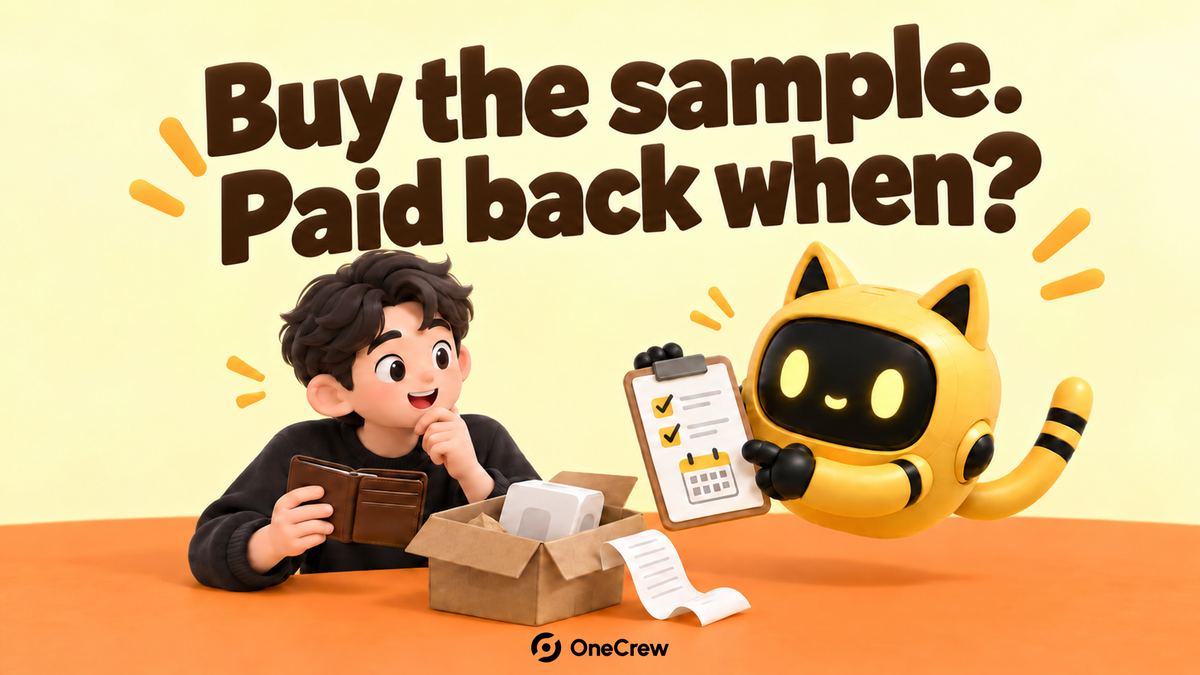
Your invitation says, “We’ll reimburse the product,” and the creator agrees to collaborate. Then shipping and tax appear at checkout. Later, when the video arrives, finance asks who approved the expense—and whether payment has to wait until the post goes live.
That short promise left several decisions unresolved. Before asking a creator to spend their own money, put the purchase details, covered costs, reimbursement conditions, payer, and payment timeline in one written confirmation. Then ask whether they accept the arrangement. If the budget or payment process is still uncertain, hold off on asking them to order.
In a Reddit post, a creator recalled expecting a brand to send a product, only to be asked to buy it, film a video, and claim the cost afterward. They said they were still waiting for reimbursement roughly two years later. It is a useful reminder to check what each side means when they agree to a collaboration.
1. Check whether the creator is willing to pay upfront
“Product provided” and “buy it now and we’ll pay you back” have different consequences for a creator’s cash flow. Explain the arrangement in the invitation so they can decide before committing to the work. If they are uncomfortable paying upfront, discuss shipping the sample yourself, placing the order on their behalf, or another mutually acceptable option.
Confirm two responsibilities internally: who can approve the sample expense, and who will make the payment. An agency working for a client should be especially clear about which company pays and whom the creator contacts. Have the payment owner confirm the process before making a promise externally.
Next, compare the invitation, quote, and subsequent messages. OneCrew helps teams organize creator profiles, outreach conversations, and collaboration records. An AI assistant connected to OneCrew can read conversations recorded there and use the expense policy you provide to identify what has been agreed and what still needs an answer. Include any agreements made elsewhere, too: a missing message is not evidence that a discussion never happened.
For example:
Review this creator’s recorded sample-purchase discussions. List whether they agreed to pay upfront, the reimbursement amount and conditions, who pays, and the timeline. Include the supporting messages. Mark unsupported details as unconfirmed and draft the questions we need to ask.
2. Turn “product costs” into a purchase checklist
A creator should not have to find out which costs are covered after checking out. Use the following table in your pre-purchase confirmation, with amounts and dates specific to the collaboration.
| Item | What to confirm |
|---|---|
| Purchase | Exact product link, seller, model, size or variant, and quantity; whom to contact if it is unavailable |
| Amount | Currency, reimbursement of actual spending or a fixed amount, any cap, and how discounts affect the calculation |
| Additional costs | Who covers shipping, tax, payment fees, and currency conversion; how to approve a total above the budget |
| Eligibility | Whether an order receipt is sufficient or reimbursement depends on delivery or publication; the exact conditions and evidence |
| Documentation | Order number, purchase date, itemized costs, amount paid, and where to submit them |
| Payment | Paying entity, contact person, method, processing deadline after the agreed trigger, and expected arrival time |
| Content fee | Any separate production or posting fee and its payment schedule; state explicitly if the product is the only compensation |
For example, the parties might agree to reimburse the actual cost of a specified product, including standard shipping and tax, up to an approved total. If checkout exceeds that cap, the creator sends the breakdown and waits for confirmation before buying. This is one possible arrangement to agree on, not a universal industry policy.
Collect only the documentation needed to check the expense. Send payment details to the responsible person through the agreed secure channel; a shared creator note can retain the confirmation status and document location. For additional import charges, consult the overseas sample cost checklist. “Free shipping” does not explain every possible charge.
Give the AI assistant connected to OneCrew the recorded replies and your current cost sheet to check for contradictions. Perhaps the invitation promised full reimbursement but a later message introduced an undisclosed cap. Or the quote bundled the sample into the fee while an email promised a separate repayment. Turn those conflicts into specific questions for the person approving the arrangement.
3. Define the trigger and separate the payment milestones
“We reimburse after the collaboration” is too open to interpretation. Does that mean when the creator submits a video, when it is approved, or when the post is live? If reimbursement depends on content delivery, specify the deliverable, acceptance criteria, feedback deadline, and revision scope. Those criteria should address the agreed work, without making a positive opinion a condition of repayment.
Replace “paid promptly after approval” with three milestones: when the documentation will be checked, when the brand will initiate payment, and when the money is expected to arrive. Include only timelines the payment owner has confirmed. If you can commit to initiating payment on a date, do not describe that as a guaranteed arrival date.
Also agree on what happens if review takes longer than expected. Name the person who will explain missing information or provide an updated date by the original feedback deadline. The creator should know whom to contact and when to expect the next update.
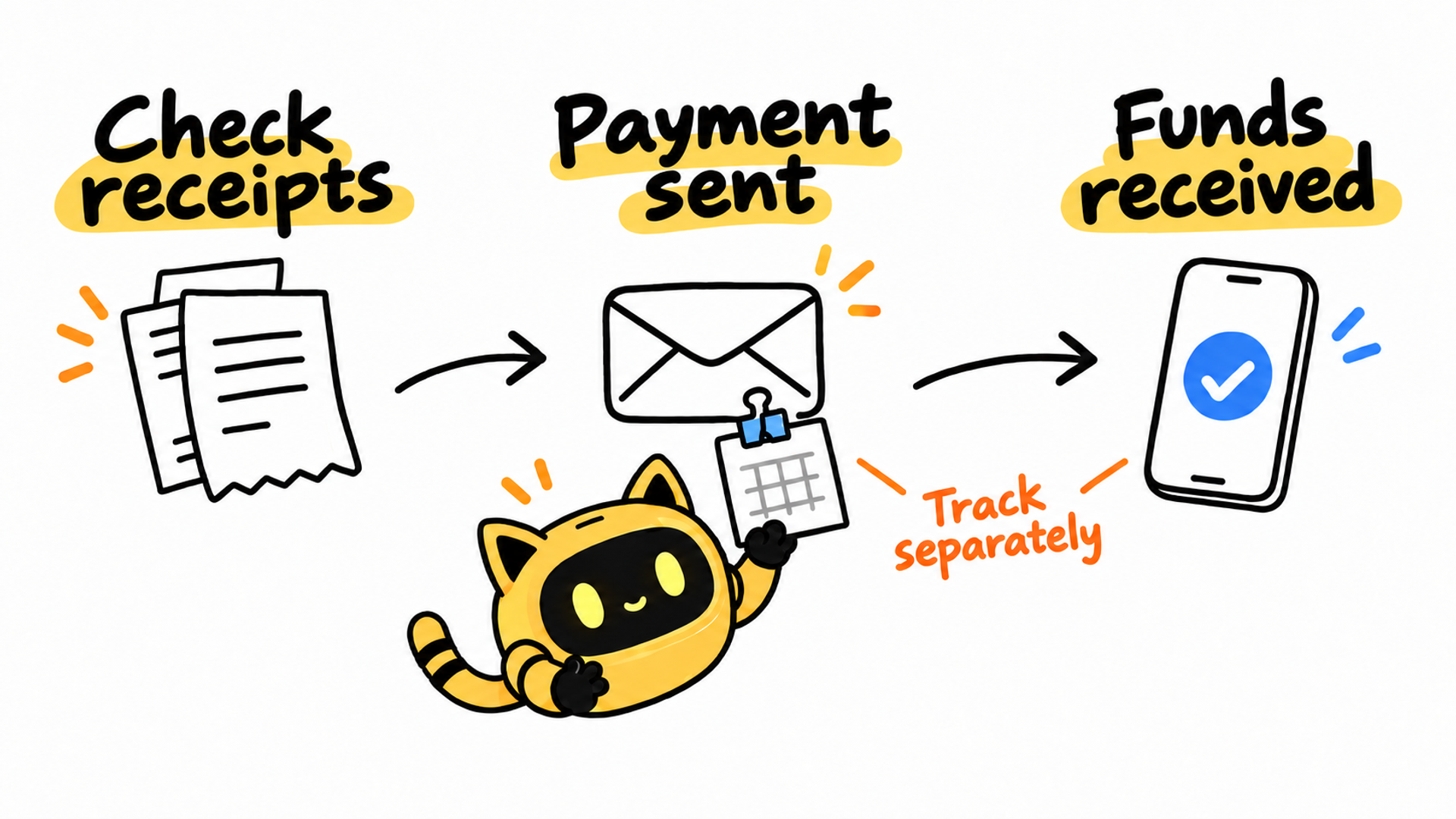
The creator’s acceptance should refer to a specific version of the terms. Save the confirmed amount, conditions, dates, and original message location in their OneCrew notes, retaining the existing collaboration history when updating them. A colleague taking over can then find the agreement without asking the creator to repeat it.
4. Send a confirmation before the purchase
Adapt this email after completing the checklist. Fill in the brackets, remove inapplicable items, and have the payment owner review it before the creator orders.
Subject: Please confirm your sample purchase and reimbursement terms
Hi [name],
For this collaboration, we’re asking you to purchase [product, variant, and quantity] from [link]. We’ll reimburse you under the terms below. Please confirm whether you are comfortable paying upfront. If not, we can discuss another way to get the sample to you.
Covered costs: We’ll reimburse [actual spending / agreed fixed amount] in [currency], including [covered shipping, tax, or other charges], up to a total of [amount]. If checkout exceeds that amount, please send us the breakdown and wait for confirmation before ordering. [Explain who covers any other fees.]
Content compensation: [State the separate production or posting fee and payment schedule, or explicitly confirm that the product is the only compensation.]
Conditions and documentation: Please submit [required documents] through [channel]. Reimbursement is due when [specific conditions] are met. If content approval is required, [person] will review it against [agreed requirements] within [timeframe].
Payment: [Company or entity] will pay via [method], with [name and contact] handling questions. We will initiate payment within [timeframe] after [specific trigger], with an expected arrival of [date or range]. If the schedule changes, [person] will update you by [date or defined milestone].
Changes or cancellations: Contact [person] before proceeding if the product is unavailable, the price changes, or you cannot complete the agreed work. If we cancel, the product is faulty, or a return is needed, sample costs, return shipping, and completed work will be handled as follows: [insert the agreed arrangements].
Please reply to confirm that these terms match your understanding. We can resolve any changes before you place the order. Thank you!
The checklist gives your AI assistant connected to OneCrew a concrete basis for drafting this email alongside the conversation history. Ask it to retain confirmed amounts and dates and flag gaps, rather than supply a plausible deadline. Before sending, check the purchase link, spending cap, and paying entity so another creator’s terms do not slip into the message.
If the creator replies, “Yes, but I’d like reimbursement as soon as the product arrives,” treat that as a proposed change. Check it with the payment owner and send revised terms. A conditional reply should not be recorded as unconditional acceptance.
5. Agree on exceptions, then record what actually happened
When everything goes to plan, follow the dates you agreed. Discuss the likely exceptions before money is spent:
- The brand cancels after purchase: Agree on who covers the incurred sample cost and whether the creator keeps or returns the product. Check completed production work separately if filming has started.
- The product is damaged, incorrect, or unusable: Specify whom to contact, whether to seek a replacement or pause filming, and whether delivery and reimbursement dates will change.
- The creator cannot complete the work: Use the agreed arrangement to discuss costs and remaining obligations, rather than introducing a new condition after the purchase.
- The retailer refunds some or all of the purchase: Reconcile the actual refund with any reimbursement already made, then confirm what remains payable or needs discussion. Avoid counting the same product cost twice.
Decide how these costs will be handled together. “We’ll deal with exceptions later” leaves the creator unable to assess the financial commitment before ordering.
Keep the record accurate once payment begins. If finance says it has initiated the transfer, record that date and the available payment reference. Add receipt of funds when the creator confirms it. Across several collaborations, an AI assistant connected to OneCrew can use recorded conversations and the payment updates you provide to organize who is missing documentation, whose conditions remain unresolved, and who needs an arrival check. Then prepare the appropriate follow-up for each person.
Before asking a creator to buy a sample, give both sides an agreement they can act on. Start with one active collaboration in OneCrew: review the existing expense promises, resolve the missing details, and prepare the purchase-confirmation email.