Your Customer Is Not a Scriptwriter: Interview Them for an Honest Video Story
Interview customers about a real experience instead of feeding them praise. Use open questions, practical recording guidance, and a final context review.

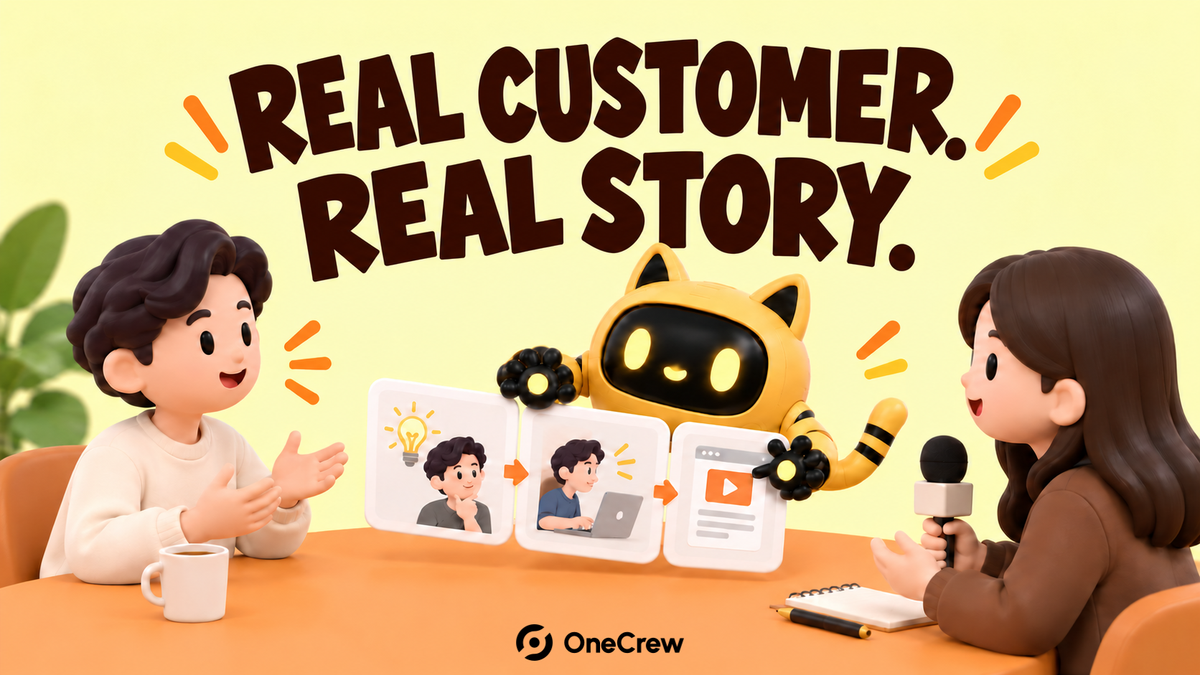
A real customer agrees to appear in a video, then struggles to read the script your team prepared. Some lines do not sound like them. Others describe results they never experienced. Making the copy more conversational will not fix that mismatch.
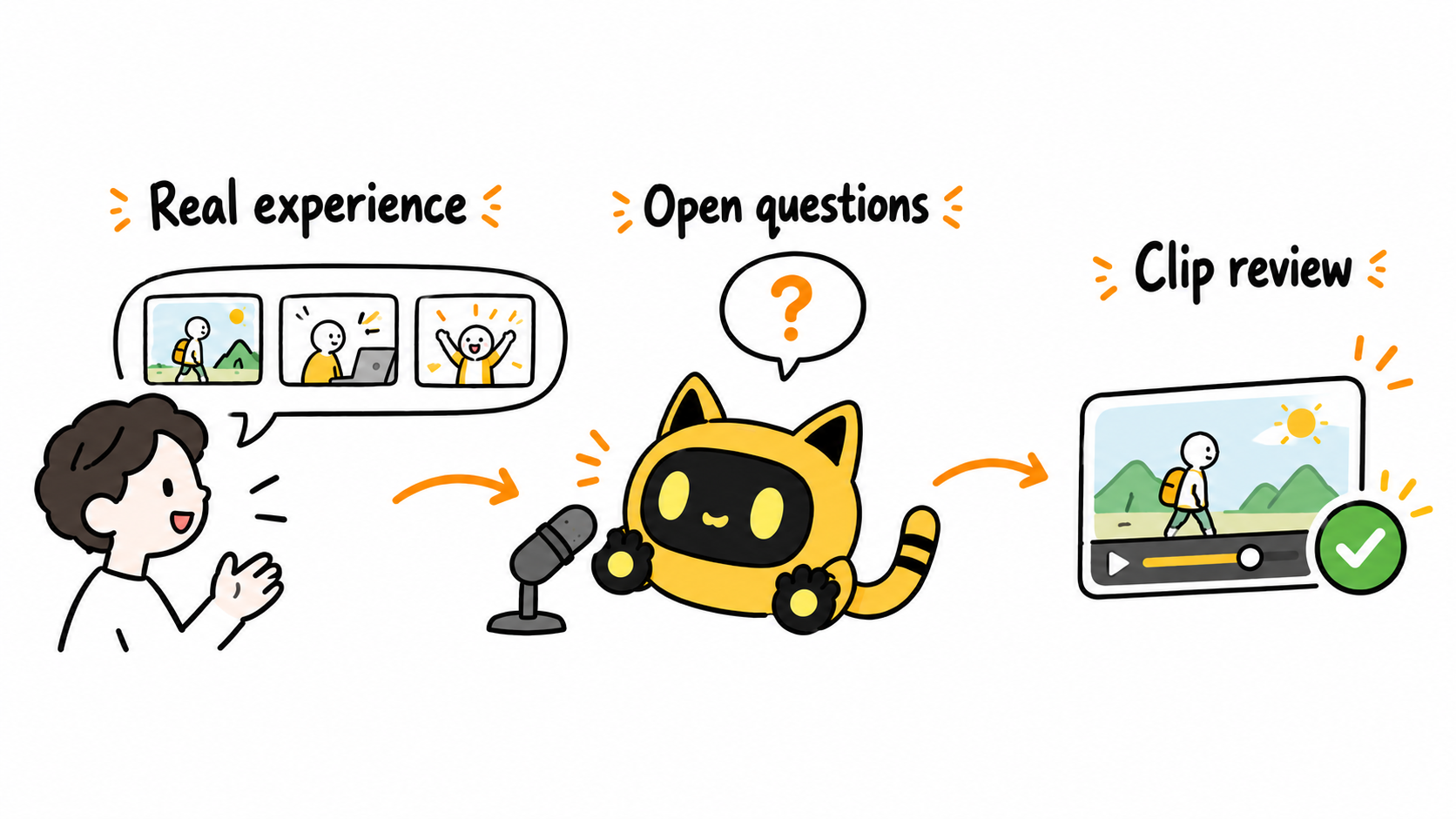
Start with a real occasion of use, ask open questions about what happened, and build the story from the answers. Send questions ahead if helpful, but let the customer provide the answers. The final edit should preserve their conditions and meaning.
Confirm what the customer wants to share
Explain the topic, recording method, expected commitment, and intended use. Invite them to choose an experience they are comfortable discussing and identify anything that should remain private. Being an existing customer does not automatically authorize displaying their order details, address, or other personal information.
OneCrew helps organize partnership contacts, worksheets, and email communication. Record the interview scope, timing, usage agreement, and unresolved items, then prepare a clear invitation draft. The person is agreeing to a defined contribution.
Ask about the sequence, not the praise you want
Ask what they wanted to accomplish, what they actually did, what changed, and what conditions influenced the experience. “It saved you a lot of time, right?” suggests an answer. “How did this compare with the way you did it before?” leaves room for their account.
| Stage | A question to adapt |
|---|---|
| Original task | What were you trying to do, and why did it matter? |
| Actual experience | What did you do first, and what happened next? |
| Reaction and change | What went smoothly, and what was still difficult? |
| Conditions | When might your experience be different? |
If someone says the task became much faster, ask what supports that impression. Without a record, retain it as their experience instead of supplying a percentage. Pauses and ordinary phrasing are acceptable; clear facts matter more than a polished advertising line.
Help a nonprofessional participant prepare
Share the topic and questions, explain the recording process, and make clear how they can pause. Agree on retakes, skipped questions, and who checks sound and picture. For self-recording, keep instructions short and check a usable sample before asking for the whole contribution.
Record the chosen format, question list, and preparation status in OneCrew. Use the existing conversation to prepare a reminder containing only what this participant needs, rather than sending several competing briefs.
Check the story again after editing
Return the proposed clip or wording with its surrounding context. Confirm the person’s name or preferred attribution, the experience, the outcome, and any necessary qualifiers. Do not combine separate answers into a promise they never made.
This is the proposed clip for [use], drawn from your account of [experience]. Please check that the wording and context are accurate, particularly [fact to confirm]. Let us know if anything needs changing or should remain private before we confirm the final version.
If compensation or gifts are involved, agree on the arrangement and check the applicable disclosure requirements. Participation should not be conditional on a positive review. Actual experience and permission for public use are separate matters to confirm.
When editing starts, use the deliverables and revisions checklist to confirm files, revision scope, and the final feedback owner.
For endorsements aimed at a US audience, consult the FTC Endorsement Guides FAQ when checking how to disclose compensation, gifts, or other material connections.
Start with the next willing participant in OneCrew, keeping the invitation, questions, and clip confirmation in one record. Your team supports the storytelling; the story still belongs to someone who used the product.