Vetting LinkedIn Creators: Do Their Followers Work in Your Target Roles and Industries?
Check reporting scope, professional demographics and content evidence before choosing a LinkedIn creator. Includes a focused audience-data request.

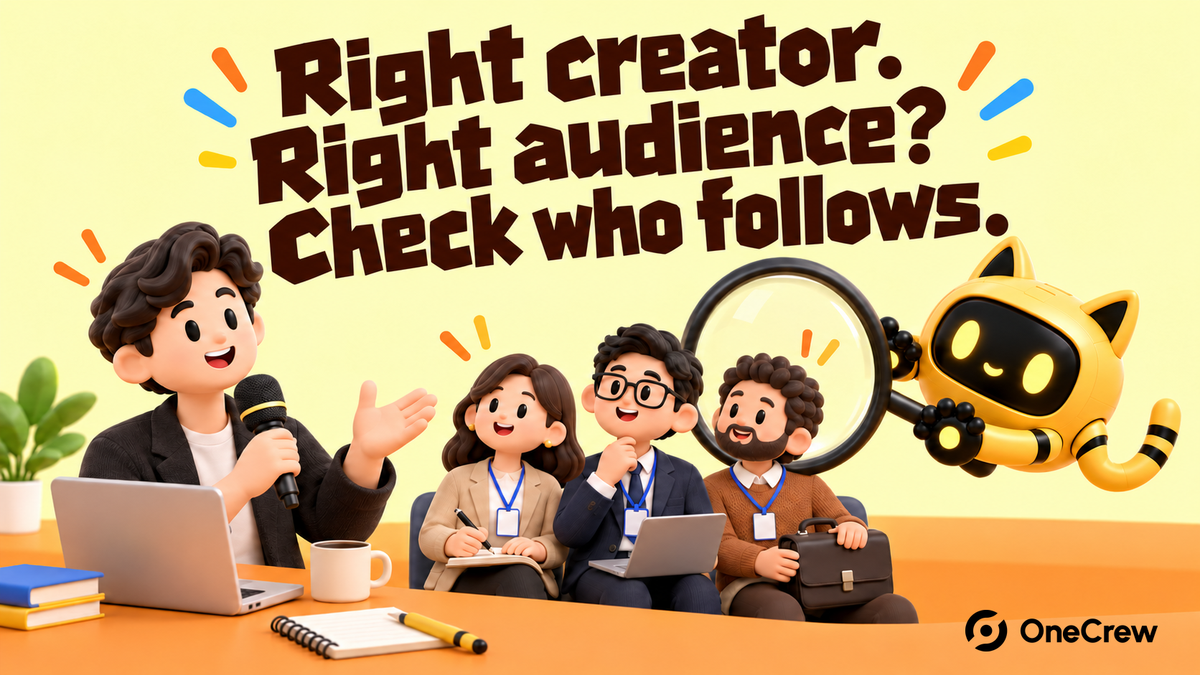
A creator's job history looks relevant and their follower count is impressive. Yet neither tells you whether the people following them work in the roles your campaign needs to reach.
Define the intended buyer first, then request audience information with its reporting scope intact. Treat the creator's experience, total follower count and professional audience breakdown as separate evidence. Together, they can support a clearer decision about the next conversation.
Describe the buyer more precisely than “B2B”
An end user, technical evaluator and budget owner may work at the same company but need different content. Write a specific audience statement, such as “operations leaders evaluating how their teams coordinate work.” This is an editorial example; your campaign needs its own definition.
Identify the roles, industries, seniority and company sizes that actually affect selection. Separate requirements from preferences before reviewing candidates. Changing the criteria after seeing an attractive account makes the decision difficult to explain.
OneCrew is an AI workspace for creator information, partnership records and email. Give the AI connected to OneCrew the agreed buyer definition. Have it read your existing candidate table before organizing the audience evidence supplied by each creator, its reporting scope and the open questions. Keep references to the original screenshots or exports so another reviewer can check the reasoning.
Check the reporting scope before comparing demographics
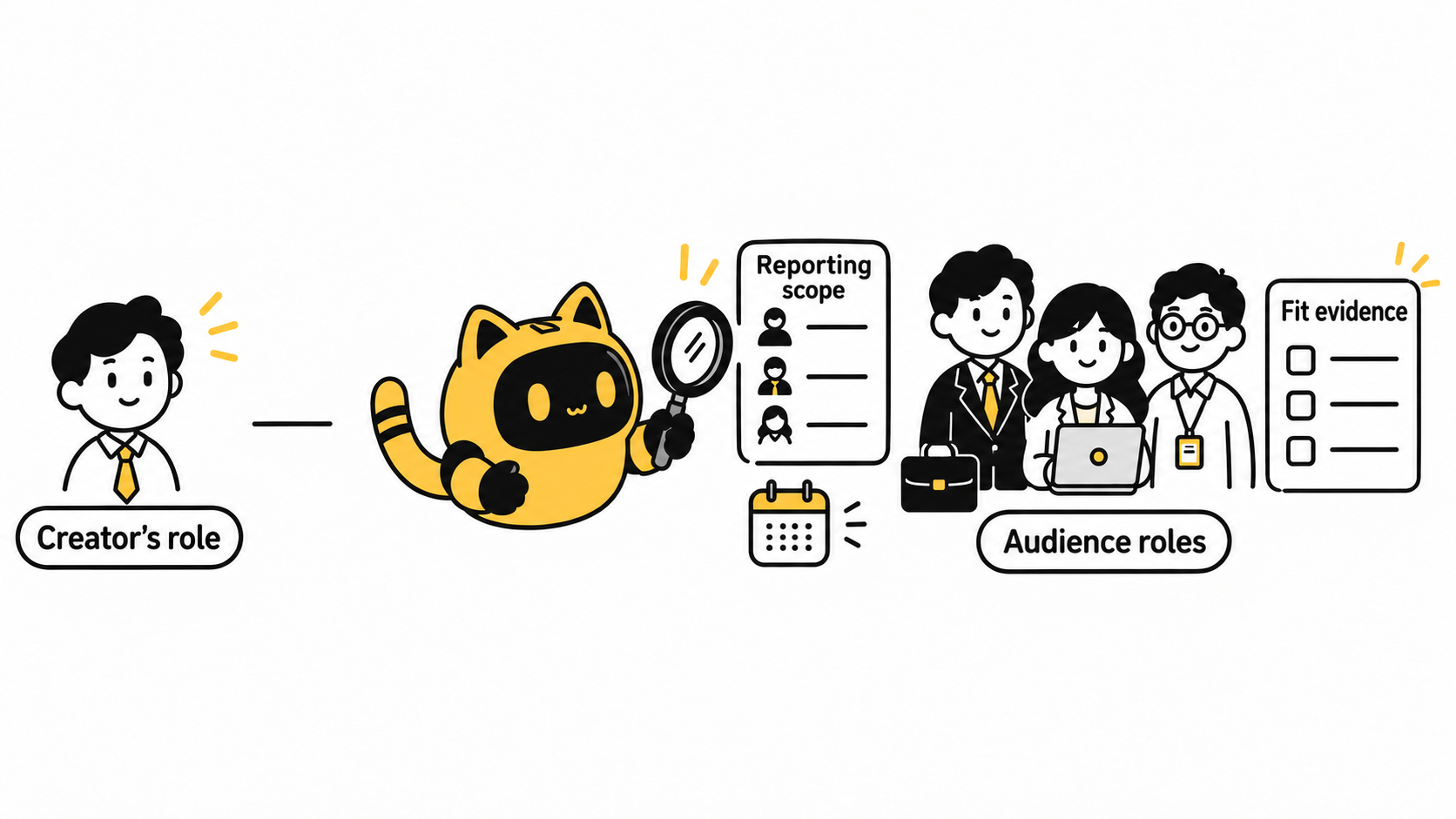
LinkedIn's audience analytics guidance lists job title, location, industry, seniority, company size and company among its demographic dimensions. It displays the top five results for each dimension and describes the figures as estimates. The selected date range applies to new-follower trends and the demographics section, rather than changing the total follower count shown at the top.
Do not multiply a percentage from that breakdown by a total from a different scope and present it as the number of buyers you can reach. Separate job-title and industry breakdowns also do not establish how many followers belong to both categories. Keep that question open when the supplied data does not answer it.
| Request | What it helps establish | What to preserve |
|---|---|---|
| A screenshot or export showing dates and metric labels | The reporting scope | Dates, labels and when the evidence was supplied |
| Leading job titles and industries | Evidence of relevant professional groups | Original category names and estimated shares |
| Seniority or company-size information, when relevant | Fit with the purchasing role | Known information and missing dimensions separately |
| A relevant post and its actual discussion | Whether the creator addresses the audience's work | Content references, without guessing each commenter's identity |
Missing from the top five does not mean absent
A role may be outside the leading results or divided across several job titles. Its absence from one screenshot does not prove the account has no relevant followers. Its presence does not prove those followers will purchase your product either.
Write a conclusion that matches the evidence: “The supplied industry breakdown includes our target sector; role fit still needs clarification.” That is more useful than an unsupported “highly targeted audience.” A creator's own procurement background supports a statement about their experience, not the occupations of their followers.
Update the original OneCrew candidate record with confirmed conditions and open items. Ask the AI to organize the supplied evidence and identify missing dimensions for a follow-up. Add newly supplied information to the same creator record rather than allowing a guessed percentage to become part of the decision.
Request one clarification with the scope made explicit
Hi [Name], this campaign is intended to reach [roles and industries]. We have reviewed [the material supplied]. Could you confirm the date range and reporting population for this demographic breakdown, ideally with a screenshot or export showing those labels? If available, please also include [a dimension the campaign genuinely needs]. If your analytics does not provide it, just let us know. We will review it alongside [specific content link] to discuss the next step.
Prepare the draft in OneCrew using the relevant existing conversation and the information still missing. Check that it does not ask again for material already provided, then review the contact and attachments before sending. You can keep discussing a content direction while evidence is incomplete; the selection record should reflect what is actually known.
If you have not built a shortlist yet, start with finding B2B creators through buyer problems before requesting audience evidence.
Start with one LinkedIn creator under consideration in OneCrew. Separate their total following, the scope of their professional audience data and the content evidence. The decision you need is what the available evidence supports, not whether the account looks large enough.