YouTube Sponsorships: Dedicated Video or Integration?
Compare a dedicated YouTube video with an integration by audience need, production scope and deliverables. Includes a comparison table and quote request.

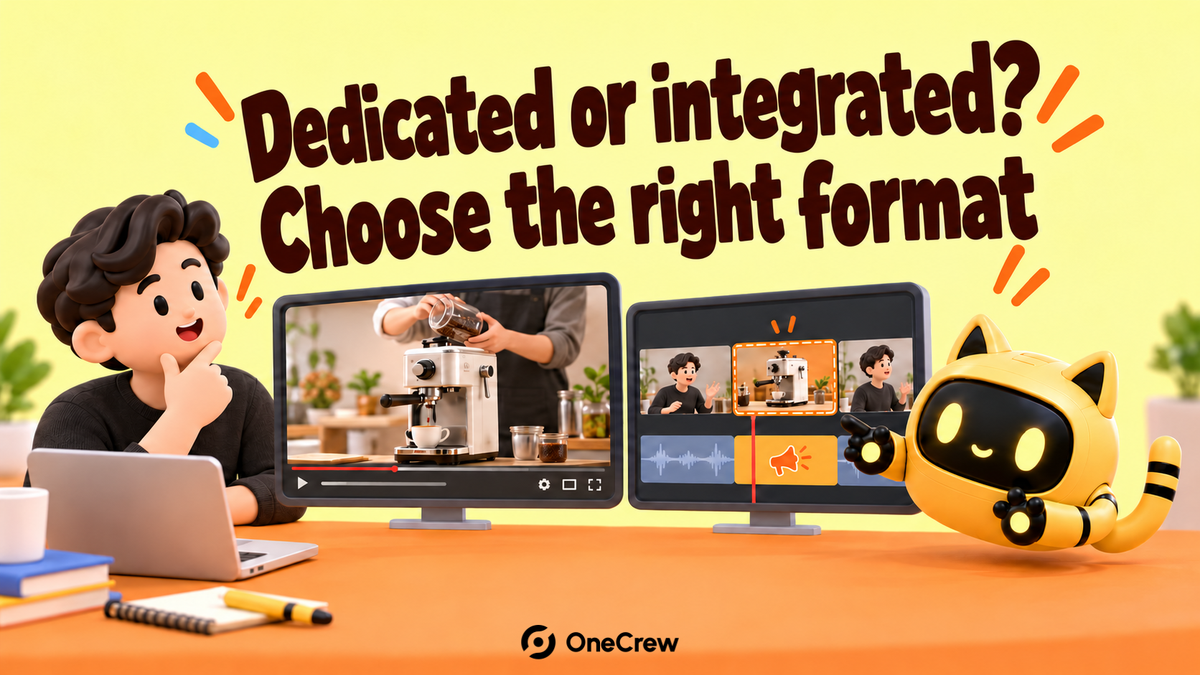
A YouTube creator offers a sponsored segment in an upcoming video or an entire video about your product. Which should the brand choose? Start with what viewers need to understand, how naturally the product fits the channel, and the work needed to explain it. Duration and price come after that content decision.
In a creator's pricing question, a brand followed a one-minute integration with a request for a dedicated product video. That changes more than the number of minutes: it can change the topic, testing, demonstration and production plan.
Write the viewer's takeaway first
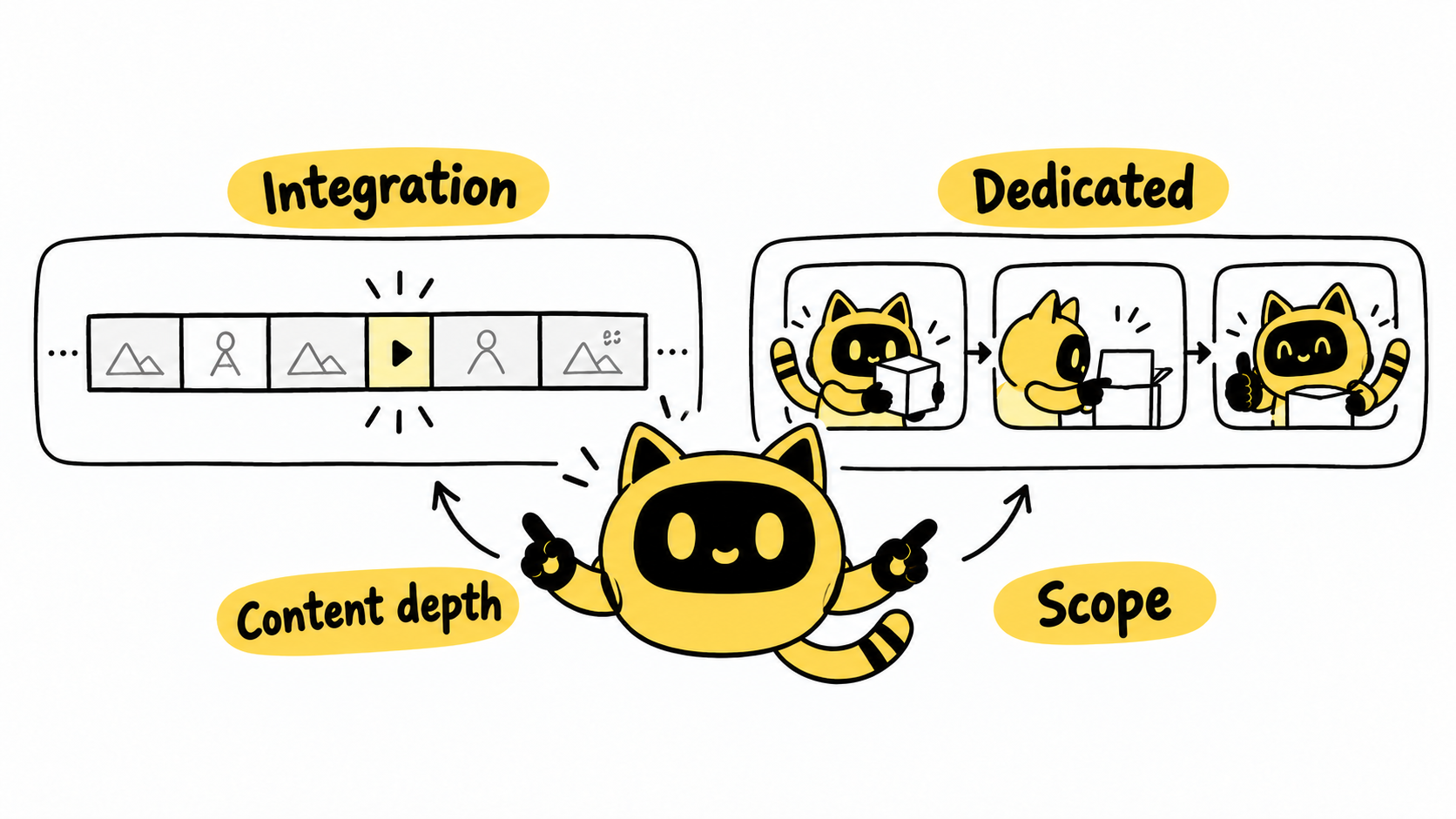
An integration can make sense when one useful point fits naturally into the creator's existing subject. A workflow video might include a relevant tool demonstration. A product that needs a full walkthrough, comparisons or explanation of limitations may benefit from dedicated coverage, provided the topic is also useful to that channel's audience.
OneCrew is a workspace for creator discovery, information management and email communication. Save relevant video links, product placement examples and your observations about the content structure in a table. A specific example explains why the creator fits much better than a broad label such as “tech influencer.”
Compare the actual production scope
| Question | Integration | Dedicated video |
|---|---|---|
| Editorial fit | How does the segment connect to the main topic? | Why would viewers watch a whole video? |
| Depth | One useful point within limited time | Possible testing, tutorials or several scenarios |
| Production | Segment, supporting footage and main-video schedule | Full outline, product experience and filming |
| Quote | Agreed segment and additional work | Full production and separately agreed rights |
There is no useful universal multiplier for turning an integration fee into a dedicated-video price. Explain both options with the same assumptions about timing and usage, then ask the creator to quote the work involved.
Ask how each option would work for viewers
For an integration, ask about the main topic, transition and demonstration footage. For a dedicated video, ask what question drives the story, what needs hands-on testing and which limitations should be explained. Agree on the direction before asking for additional work such as a full script or test shoot.
Your connected AI can use the synced email thread and the information you provide to prepare a focused clarification draft through OneCrew. Keep the creator's reasoning alongside the quote, so internal reviewers see the proposed content rather than a price without context.
Put the two options in one clear request
We want viewers to understand [specific use or problem]. Your treatment of [detail] in [video link] looks relevant. Could we compare A, an integration covering [scope] in a suitable video, and B, a dedicated video exploring [question]? Which would work better for your audience? Please outline the approach, information you need, timing and fee for each. We will separately confirm links, usage and review steps for the chosen option.
Also agree on publication timing, the purchase link and commercial disclosure. YouTube's official guidance addresses declaring commercial relationships. A segment that feels natural still needs the applicable disclosure.
Choose the measurement plan after the content plan
Record the content objective, timing and available evidence. One integration and one dedicated video, even from the same creator, are not automatically a controlled comparison. View counts alone cannot establish which format always works better. The distinction between engagement and buying intent can help frame the objective.
Start in OneCrew by saving the reference videos and the two proposed scopes. Then draft a request that makes it easy for the creator to explain the content they would actually deliver.