Does PayPal-Only Checkout Hurt U.S. Store Conversion?
PayPal-only checkout can add friction, but first test the real buyer journey and payment funnel before adding cards or accelerated payment methods.
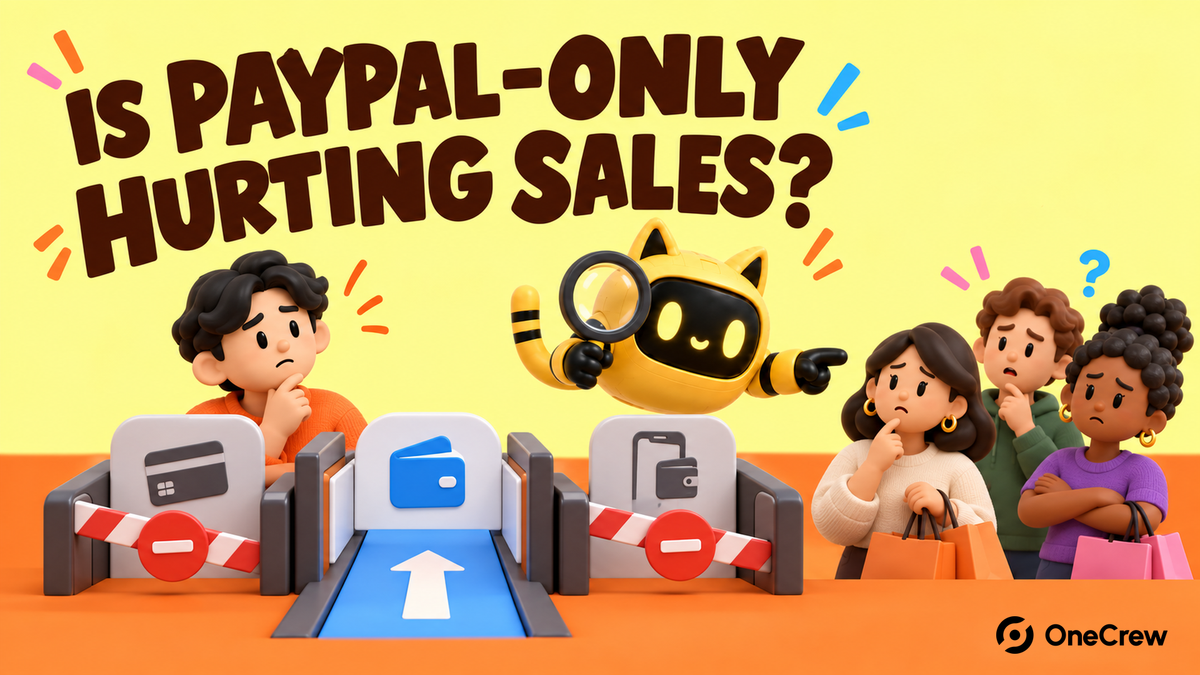
Offering only PayPal on a U.S.-focused storefront can create friction for some shoppers, but a thousand ad clicks with almost no orders does not prove that PayPal is the cause. Traffic quality, product positioning, price, shipping, delivery promises, trust signals, and checkout errors can all stop the purchase before the payment screen.
Start by reproducing the real customer journey. Then use funnel data to identify where people leave before changing the payment stack.
Find out what shoppers actually see
According to PayPal’s current Guest Checkout documentation, PayPal Checkout can let some buyers pay by debit or credit card as guests without signing in to a PayPal account. Guest checkout is not shown to every buyer on every transaction; availability can depend on factors including purchase history, cookies, location, and risk assessment.
That means “PayPal only” can create two different experiences: one shopper may see a clear card option, while another mainly sees a PayPal login or account-creation path. Testing only on the merchant’s usual device misses this difference.
Build a checkout test matrix
- Test both desktop and mobile.
- Test while signed in to PayPal, signed out, and in an environment without existing PayPal cookies.
- Use a legitimate address in the target U.S. region and check shipping and tax.
- Test the main product, discount codes, several cart values, and stock conditions.
- Record each screen, button label, and error from product page to payment confirmation.
Use valid test methods that comply with the provider’s rules. Do not fabricate identities or repeatedly trigger live risk controls simply to reproduce an edge case.
Use a funnel, not raw ad clicks
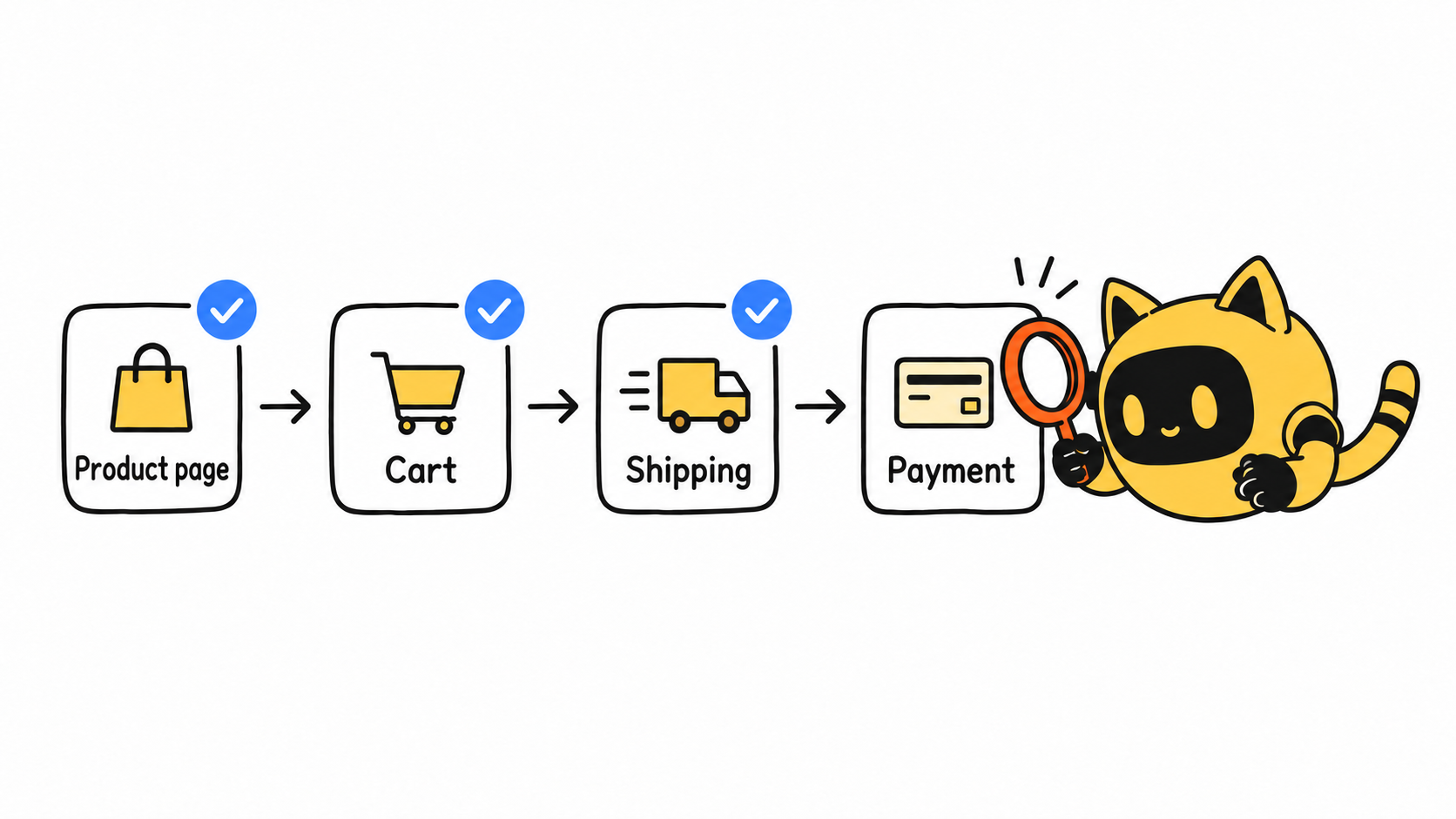
At minimum, separate product-page visits, add-to-cart events, checkout starts, arrivals at the payment step, and completed payments. If visitors rarely add to cart, payment is unlikely to be the first problem. If exits or errors cluster at the payment step, then payment choice, currency, technical errors, and risk controls deserve closer attention. Use this ad-clicks-without-sales checklist to diagnose earlier funnel problems.
Break the funnel down by source, device, new versus returning visitor, and target geography. Low-intent paid traffic should not be combined with branded search when diagnosing checkout friction.
Add payment choice deliberately
As of September 2026, Shopify Payments documentation for U.S. merchants lists credit and debit cards as well as accelerated checkout methods. Shopify’s current PayPal setup documentation also describes PayPal Wallet through Shopify Payments for merchants in the United States and France. What a store can activate still depends on the business entity, product category, account review, and current Payments settings.
The goal is not a wall of logos. It is to offer the primary audience familiar, compliant, and stable ways to pay. Before enabling a new method, review processing fees, refunds, chargebacks, settlement timing, and fraud responsibility.
Run a controlled payment-method test
- Fix obvious checkout defects and keep the product, price, shipping, and landing page stable.
- Record the payment funnel before the change, including source and date range.
- If eligible, add one primary card or accelerated payment path.
- Keep traffic and offers as consistent as practical, then compare payment-step arrival, failures, and completed orders.
- Review error logs, refunds, and chargebacks alongside conversion rate.
When the sample is small, call the result directional. A few orders are not enough to prove a permanent conversion lift.
Keep checking the rest of the buying journey
Does the product page answer sizing, materials, and use-case questions? Is the price credible for the market? Do shipping and tax appear only at the last moment? Are returns, contact details, and delivery timing easy to find? Does the mobile checkout work? Does the landing page match the ad promise? Payment is the final gate; adding another wallet cannot open gates that were closed earlier. With limited traffic, use a low-traffic product-page test to isolate one problem at a time.
Diagnose first, then expand payment options
PayPal-only checkout may create friction, but prove it with real checkout tests and funnel data. Confirm whether guest card checkout is available, inspect payment-step exits, and add a compliant card option if the business is eligible. That produces a decision you can verify rather than a promise that changing payment methods will automatically produce sales.