Buying UGC Videos? Choose Creators for the Work, Not Just Their Following
Separate video production from creator posting, then assess relevant work and production requirements. Includes a shortlist checklist and outreach template.

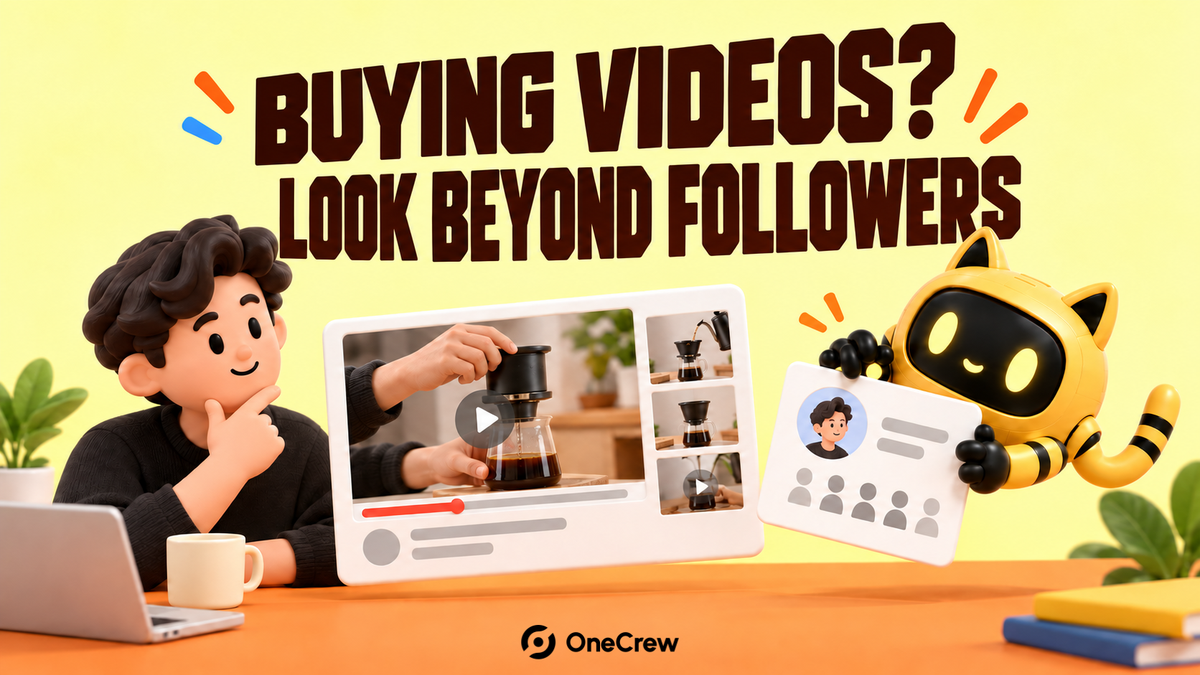
Your team needs a few videos for its product pages and brand accounts. You open the shortlist and sort by follower count. A promising filmmaker drops out, a larger account moves into negotiation, and only then does someone ask: were we ever planning to have the creator publish this?
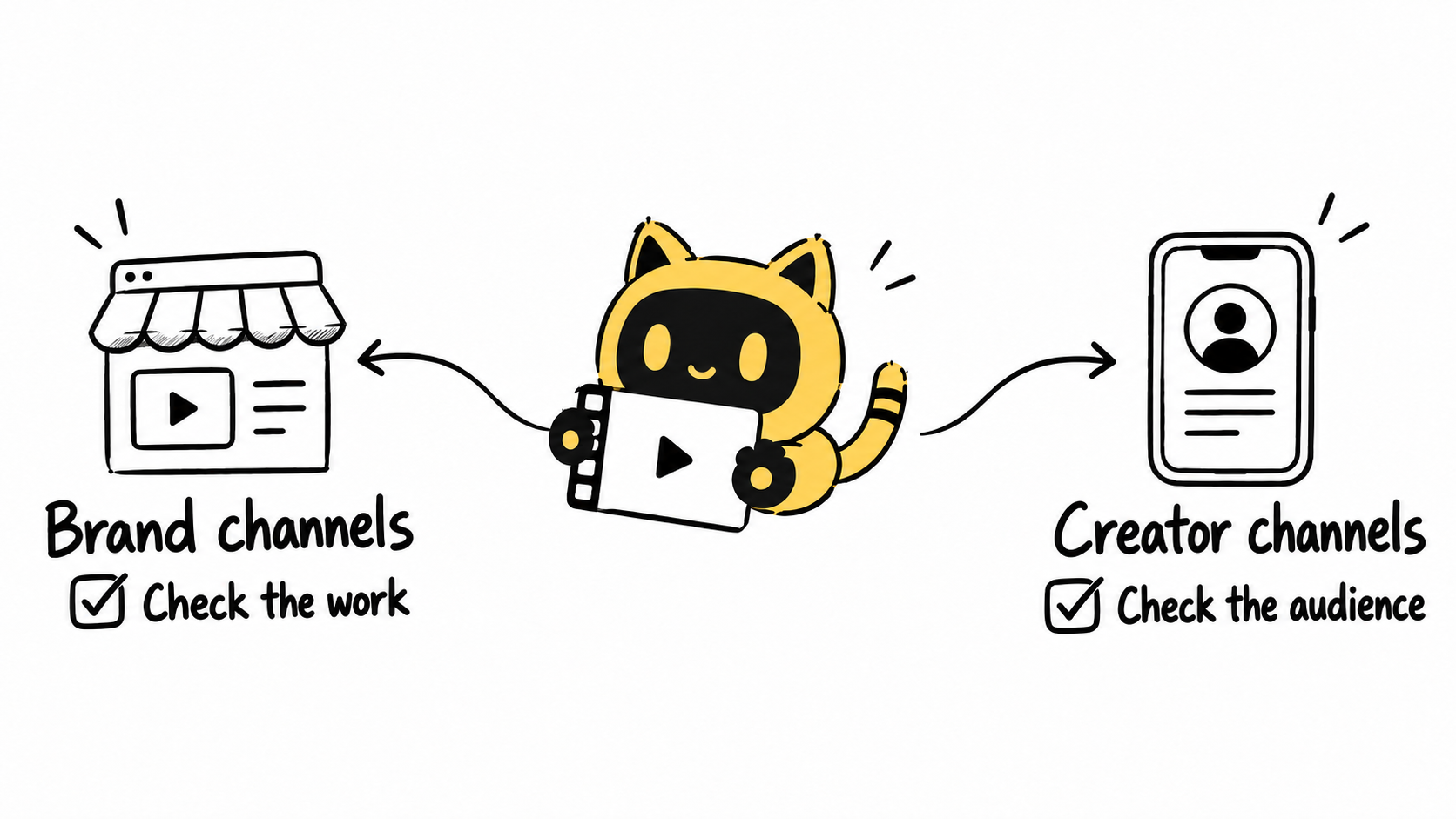
When you are buying video production, start with relevant work, production requirements and delivery terms. If the creator must also publish to their own account, add evidence about that account’s audience and the proposed placement. Follower count provides background about an account. It does not establish whether someone can make the video you need.
In a creator’s discussion about UGC recruitment, a company reviewed a portfolio, requested social profiles and then declined to proceed. The author explicitly says they do not know whether follower count caused the rejection. The practical question for brands is clearer: does your invitation describe a production job, a posting partnership, or both?
Decide who will publish the video
Here, UGC means creator-produced content commissioned for a brand, often involving a product demonstration or a personal style of presentation. That label alone does not communicate the scope. Write one actionable sentence: “We need a video showing how to clean our coffee maker, for our product page. You will not be required to post it to your account.” Specify the actual channels and planned uses, including advertising if relevant.
If you want the creator to introduce the product to their audience, identify the account, format and proposed publishing window. You can buy both services, but list them separately when screening and requesting a quote. Agreeing to make a video should not become an unexpected request to “post it as well.”
OneCrew helps teams discover creators, organize candidate information and manage email workflows. Save the campaign objective, existing work and outstanding questions in the same workspace table. Colleagues can then use the same criteria, and the person preparing the invitation can see which type of partnership is actually being discussed.
| What you need | What to check first | What to state in the invitation |
|---|---|---|
| Video production for brand use | Relevant work, demonstration skills and production conditions | Planned uses, deliverables and no personal posting requirement |
| Publication on a creator’s account | The relevant content and audience fit | Account, format, availability and any necessary supporting data |
| Both production and publication | Production ability and account fit separately | Both scopes and fees, plus any additional uses of the material |
Watch the work you are hiring someone to do
Review complete examples that resemble the task, rather than relying on a highlight reel. For a coffee-maker cleaning video, look at whether the creator can explain disassembly, cleaning and reassembly. Can you see the relevant parts? Do the narration and demonstration agree? Attractive coffee photography is a useful lead, but it does not prove someone can explain a maintenance procedure.
Use the following fields in your shortlist. Record what you observed, then separate it from what you still need to ask.
- Work sample: the link, relevant segment and connection to your brief.
- Observed skill: the specific demonstration, explanation, sound, captions or editing that fits.
- Open production questions: language, location, equipment, ability to use the sample, and which parts of the example the creator produced.
- Commercial arrangements: availability, what the quote includes and what the brand must supply.
- Next action: request missing information, start a conversation or pause consideration, with a reason.
When organizing candidates in OneCrew, ask the connected AI to separate your supplied observations and the creator’s replies into evidence and open questions. “This video demonstrates a cleaning process” is different from “this person has confirmed they can film our machine.” Keep that distinction in the record.
Use existing work first. If an essential production condition still needs to be tested, discuss a paid pilot with a defined scope. Do not turn screening into a requirement to make a complete custom video for free.
Add audience evidence when the scope includes posting
If the plan depends on reaching the creator’s viewers, assess the account and format where the content will appear. Long-form video performance does not establish short-form performance, or performance on another platform. A follower total also does not tell you whether viewers are in your sales market.
Request private analytics only when they affect the current decision, and specify the reporting period and scope. The audience geography checklist explains how to distinguish a creator’s location from the audience they reach. Leave missing information open rather than estimating a percentage from a profile biography.
Record publishing requirements alongside production requirements in OneCrew. If your team adds a posting request later, confirm the account, timing, fee and usage arrangements before updating the invitation. A positive reply about production should remain a production agreement until the additional work is discussed.
Make the first invitation specific
For a production-only project, open with the work that made the creator relevant. Adapt this template with real details. If advertising is planned, say so and confirm the applicable usage scope.
Hi [name], we watched [work sample]. The way you [specific demonstration or explanation] is close to what we need for this project.
We would like to commission [format and quantity] for [product], focused on [specific question]. We plan to use the content on [brand channels and intended uses]. You would not be required to publish it to your own account.
We will provide [sample and information], with [deliverable] requested by [date and time zone]. Could you confirm whether you have [necessary production conditions], and what your quote includes for production, revisions and usage? Relevant existing examples would also be helpful.
If we later want to add a post on your account, we will discuss that as a separate request. Thank you.
Use the candidate record and current brief to prepare an email draft with the AI connected to OneCrew. Check the reference, intended uses and dates before sending. Compare replies on the same scope: a file-delivery quote and a production-plus-posting quote are different offers.
Leave a reason someone else can act on
Before proceeding, write a concise selection note: “The existing work explains cleaning steps clearly; the creator has confirmed the filming location. This is production only, with usage arrangements still to confirm.” That is more useful at handoff than a generic “good creator” label.
Start the next project in OneCrew by recording who will publish, which work you reviewed and what remains unresolved. Clear scope gives the team a useful basis for selecting people—and keeps follower count from standing in for the work you actually need.